
When Infrastructure Cycles Meet Technology Cycles
Article originally published on LinkedIn
View original article on LinkedInFor most of the last two decades, the data center industry followed a relatively stable mental model. Facilities were designed around long-lived physical assets, financed with infrastructure logic, and leased under assumptions that resembled utilities. Power was abundant enough to be treated as an input. Technology evolved, but slowly enough to fit inside amortization schedules.
That alignment is now shifting because artificial intelligence has introduced a different tempo into the system. Hardware refresh cycles are shortening, whilst power density is increasing faster than grid reinforcement. Cooling architectures are changing within the lifespan of buildings. As a result, the traditional relationship between infrastructure cycles and technology cycles is being redefined.
This is not a crisis. It is a structural transition.
From Buildings to Systems
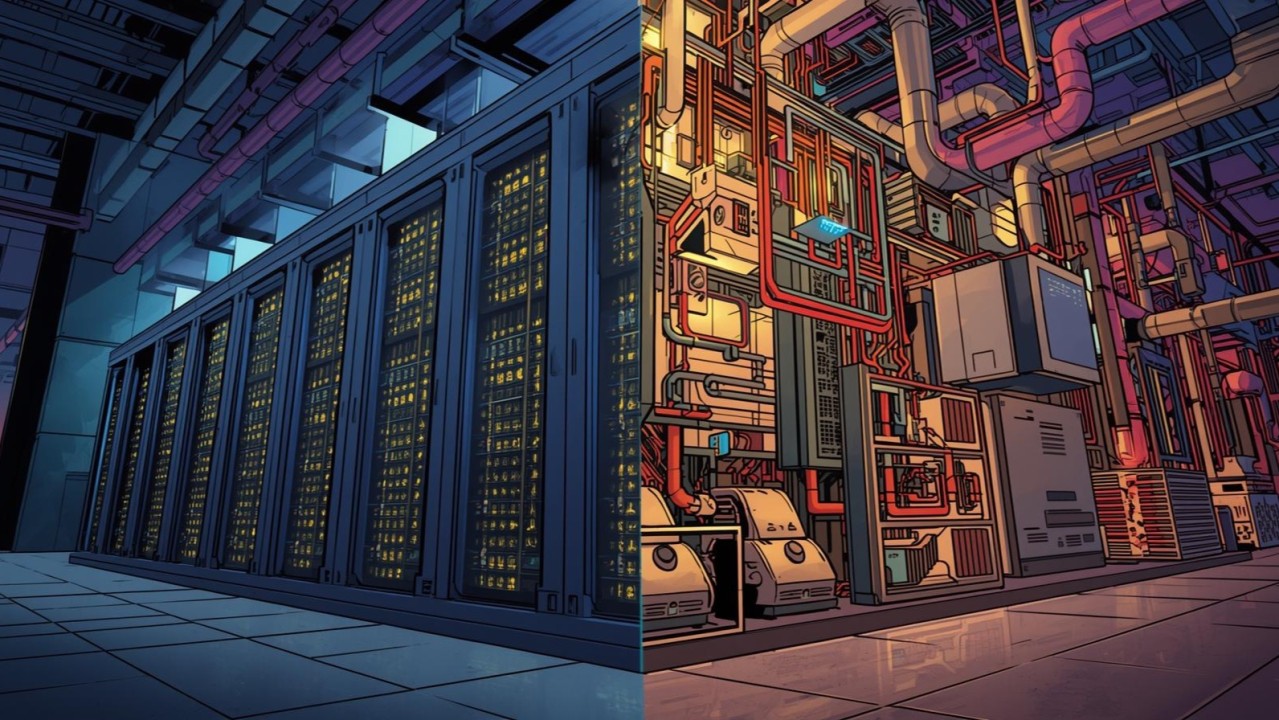
A modern AI data center is no longer a passive container for IT equipment. It behaves more like an integrated industrial system. Power delivery, cooling loops, network topology, and grid interaction determine whether compute can be deployed effectively. The value of the asset increasingly resides in its internal systems rather than its shell.
Industry leaders have started to articulate this shift clearly. Mark Thiele, who has spent decades designing large-scale infrastructure, recently described AI facilities as optionality machines. The idea is simple but powerful: the most valuable data centers are those that preserve the ability to adapt as workloads, chip architectures, and power profiles evolve. Optionality, in this context, is not about flexibility in leasing terms. It is about technical adaptability. Can the facility support a new generation of accelerators? Can it accommodate liquid cooling without full reconstruction? Can it reallocate power across halls as density patterns change?
These questions now sit at the center of asset strategy.
The Grid Is Becoming Part of the Asset
At the same time, the boundary between data centers and the electricity system is dissolving. Historically, grids were external infrastructure. Operators connected, paid tariffs, and optimized within the limits provided. Today, power availability, connection timing, and grid stability increasingly shape where and how digital infrastructure is built.
Recent research published in Nature Energy reframes AI data centers as grid assets rather than grid loads. This perspective is gaining traction across utilities and regulators. Large facilities can provide demand response, load shifting, and even grid stabilization services when designed appropriately. This changes the economic role of data centers. They are no longer only consumers of energy. They can act as flexible nodes within the energy system, especially when paired with on-site generation, storage, and intelligent load management.
In practical terms, this means that the most competitive projects are those that integrate power strategy from the outset. Grid connection is a core design variable.
Why Traditional Infrastructure Assumptions Are Being Rewritten
Infrastructure investors are accustomed to long-duration assets with stable revenue profiles. Early renewable energy investments fit this model well. Photovoltaic technology improved gradually over time, but its fundamentals remained stable. A solar plant built twenty years ago still produces energy today, often under fixed feed-in tariffs that insulated investors from market volatility. The inverters might have been changed on year 10, but overall the equipment and the unifilar remains the same.
Data centers now follow a different logic, as AI hardware evolves on a three- to four-year cycle and cooling methods shift from air to liquid. Power architectures move toward higher voltages and tighter tolerances. These changes happen within the lifespan of the facility, not between generations of assets.
As a result, value preservation depends on continuous relevance. A data center that cannot evolve technically may retain its physical structure but lose its economic purpose. This reality requires a more specialized investor mindset. Returns depend less on lease duration and more on the ability to sustain technical fitness over time.
Optionality as a Design Principle
The most advanced operators are responding by embedding optionality into their designs. This includes modular power blocks that can be upgraded incrementally, cooling systems that support multiple thermal envelopes, and network layouts that anticipate future bandwidth and latency constraints. It also includes contractual structures that recognize change rather than resist it.
This approach aligns with how AI workloads behave. Training clusters, inference farms, and edge deployments each impose different requirements. Facilities that can pivot between them maintain relevance across cycles.
Capital Is Following Technical Credibility
Investment patterns already reflect this shift. Capital increasingly concentrates around operators that demonstrate deep engineering capability, strong utility relationships, and credible upgrade paths. Markets with clear regulatory frameworks and grid expansion plans attract more consistent funding.
Conversely, projects that rely on static assumptions face higher scrutiny. Long leases alone no longer guarantee confidence. Investors ask how the asset performs at contract renewal, not just at signing.
Data Centers as Strategic Infrastructure
Governments are also adjusting their perspective. As AI becomes embedded in public services, industry, and defense, the resilience of the underlying infrastructure matters. Facilities that integrate energy management, grid coordination, and secure operations align more closely with national priorities.
This is particularly visible in Europe, where energy policy, digital sovereignty, and infrastructure planning increasingly intersect. Data centers that contribute positively to grid stability and local energy systems fit more naturally into this framework.
A New Equilibrium Is Emerging
The convergence of fast technology cycles and slow infrastructure cycles does not invalidate the data center model. In that clarity, a new equilibrium is forming, with digital infrastructure designed as a living system, connected to energy networks, responsive to technological change, and valued for its ability to evolve.
Related Articles
Are We Building the Next Bubble in Data Infrastructure?
AI capex is reshaping economies, but is construction running ahead of sustainable revenue? An analysis of the $800B gap between infrastructure investment and revenue generation.
Powering AI: Energy Systems Under Strain & the OpenAI Demand Surge
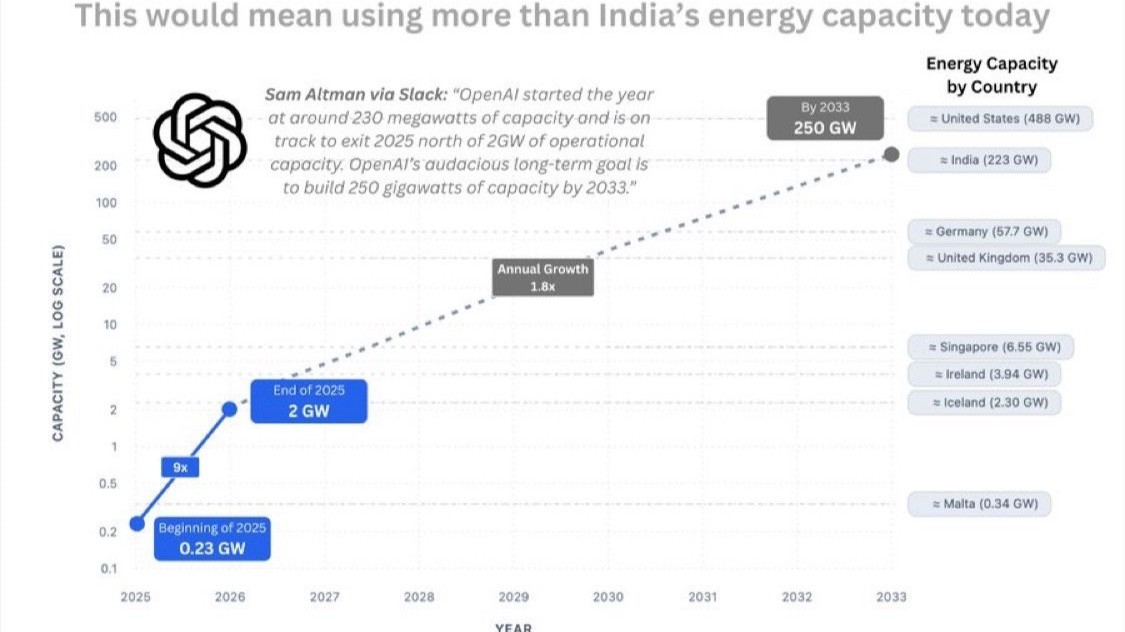
OpenAI has 9x'd their capacity this year, with a goal to 125x further by 2033, exceeding current energy capacity of India.
From Builders to Owners: Spain's Choice in the AI Data Center Boom
Spain is living through an unprecedented moment in digital infrastructure. The question is: will Spain merely host the buildings, or capture the value that flows through them?