
RDL 7/2026: A New Legal Framework for Grid Access and Its Implications for Data Center Development in Spain
Article originally published on LinkedIn
View original article on LinkedInSpain's Royal Decree-Law 7/2026, of 20 March, introduces a structural reform of the legal regime governing electricity demand access.
The decree replaces a system based on temporal priority and low holding costs with a performance-based, economically enforced framework, aimed at eliminating speculative behavior and reallocating grid capacity toward executable projects.
From a legal and strategic perspective, this reform has direct implications for data center and AI infrastructure development.
1. Capacity Reservation as a Legal and Economic Obligation (Article 11)
Article 11 introduces a new concept: the "capacity reservation charge" (Spanish: prestación por reserva de capacidad). This charge applies to all holders of access permits from the moment the permit is granted until the start of operations.
Key legal characteristics:
- It is a regulated patrimonial charge (i.e., a mandatory economic obligation established by law, distinct from a tax)
- It is calculated based on network tariffs, reserved capacity (MW), and a regulatory coefficient
- It is independent of actual electricity consumption
- Non-payment exceeding a defined threshold results in automatic expiration of the permit (Spanish: caducidad automática)
The legal consequence is that grid-access rights are no longer passive entitlements, but cost-bearing legal positions. In economic terms, this transforms access permits into financially active assets, with material carrying costs during the development phase.
2. Elimination of Speculative Access Through Legal Constraints
The reform directly addresses structural inefficiencies in the previous regime, where a significant portion of granted capacity remained unused. According to the regulatory background, up to approximately 90% of access capacity in distribution networks was not effectively utilized, leading to administrative congestion rather than physical scarcity.
RDL 7/2026 introduces a coordinated set of legal mechanisms to eliminate this behavior:
- Continuous economic obligation (Art. 11)
- Binding link between permit and declared activity (Art. 12)
- Progressive milestones and expiration regime (Transitional Provisions 3–5)
This results in a systematic filtering of non-executable projects.
3. Binding Link Between Permit and Economic Activity (Article 12)
Article 12 requires applicants to declare a CNAE code (Spanish: Clasificación Nacional de Actividades Económicas, i.e., National Classification of Economic Activities).
This requirement has legal consequences:
- The declared activity becomes binding for the installation
- Changes at the level of economic category are not permitted
- The activity must correspond to actual operations within a defined period
- Non-compliance triggers automatic expiration of the permit (caducidad automática)
This provision eliminates the possibility of holding permits without a clearly defined and legally committed use.
4. Transition from Time-Based to Execution-Based Allocation (Article 13.4)
Article 13 introduces a shift in the allocation logic for grid access. While maintaining a formal structure of administrative priority, Article 13.4 allows the use of the declared start date of consumption as a criterion for ordering applications.
This creates a dual system:
- Primary level: administrative prioritization (e.g., essential services, strategic industrial projects)
- Secondary level: ranking based on project readiness, proxied by the committed start date
In practice, this establishes a First Ready, First Served (FRFS) model. Failure to meet the declared timeline may result in automatic permit expiration. From a legal standpoint, priority is no longer a function of application timing alone, but of demonstrable execution capability.
5. Introduction of Flexible Access as a Legal Category
RDL 7/2026 also modifies the regulatory framework governing access conditions by introducing flexible demand capacity. This reform is implemented through amendments to existing regulations, including:
- The formal distinction between firm capacity (guaranteed supply) and flexible capacity (non-guaranteed supply)
- The recognition that certain technologies, such as storage, inherently operate under flexible conditions
Under the previous regime, access implied a guarantee of supply at all times. The new framework allows:
- Connection under non-continuous supply conditions
- Integration of storage and modulated demand
- Utilization of previously unavailable network capacity
This introduces a new degree of legal and operational flexibility in grid access.
6. Progressive Milestones and Automatic Expiration Regime (Transitional Provisions 3–5)
The decree establishes a series of binding milestones that condition the validity of access permits. These include:
- Early-stage options for voluntary withdrawal without penalty
- Intermediate obligations linked to network investment commitments
- Final deadlines for execution agreements and access contracts
Failure to comply with these milestones results in automatic expiration of the permit (caducidad automática). This transforms access permits into conditional legal rights, subject to continuous verification of project progress.
7. Strategic Implications for Data Center Development
The legal framework introduced by RDL 7/2026 has several direct implications:
- Internalization of Pre-Operational Energy Costs: Developers must incorporate capacity reservation charges into financial planning prior to commissioning.
- Mandatory Alignment Between Legal Title and Economic Activity: Permits are no longer abstract rights but are tied to a specific, enforceable use.
- Incentivization of Integrated Energy Models: Projects that combine i) On-site or dedicated generation; ii) Energy storage systems, and iii) Dispatchable capacity, are structurally better positioned to reduce exposure to reservation costs, align with emerging requirements for temporal matching of energy supply and demand and improve regulatory and financing outcomes.
8. Conclusion: Redefining the Legal Nature of Grid Access
RDL 7/2026 establishes a new legal principle: access to electricity networks is conditional, enforceable and economically burdened. This represents a departure from the previous model of speculative reservation toward a system based on economic accountability, legal enforceability and demonstrated execution.
For data centers, this implies that they are no longer purely digital infrastructure assets, but they must be understood, in legal and economic terms, as energy-integrated infrastructure projects, subject to regulatory performance criteria.
At BtMData, we consider this reform not as an isolated national measure, but as a precedent for broader European regulatory evolution.
Related Articles
Powering AI: Energy Systems Under Strain & the OpenAI Demand Surge
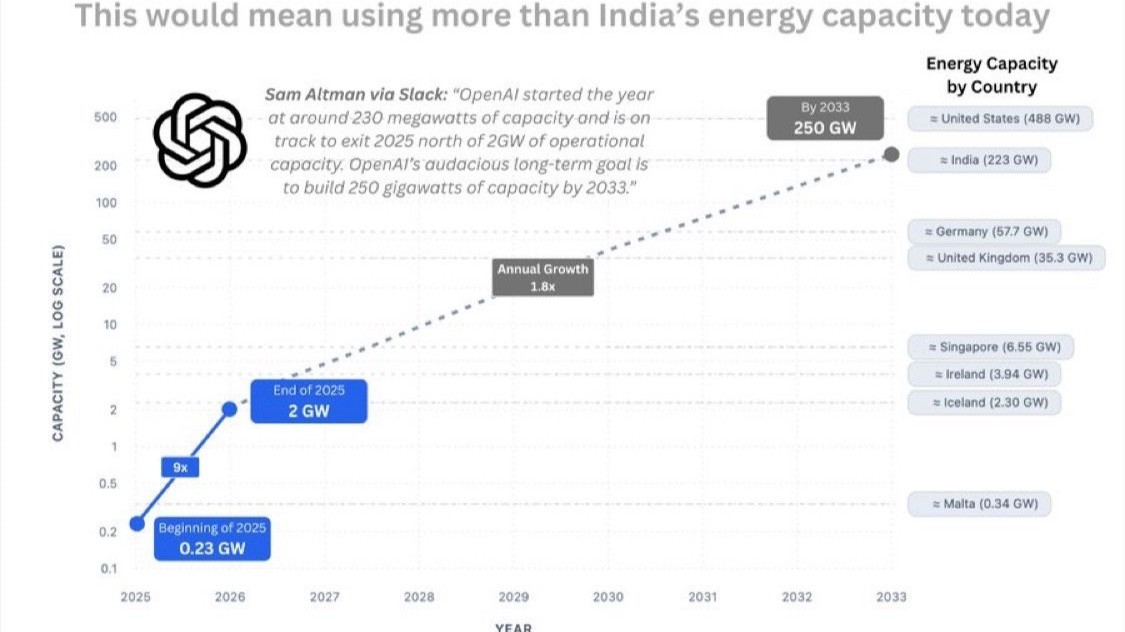
OpenAI has 9x'd their capacity this year, with a goal to 125x further by 2033, exceeding current energy capacity of India.

From Marshall Plan to Data Plan: Spain's Energy Advantage
Spain transforms from being excluded from the Marshall Plan to becoming Europe's data center hub, powered by cheap renewable electricity and massive infrastructure investment.

Microgrids and the New Economics of Powering Data Centers
A microgrid is a localized energy system that can operate connected to the main grid or independently. For data centers, microgrids are no longer an option but a strategic necessity.