From Barrels to Bytes: Why the Venezuelan Raid is a War for the Next Cloud
Article originally published on LinkedIn
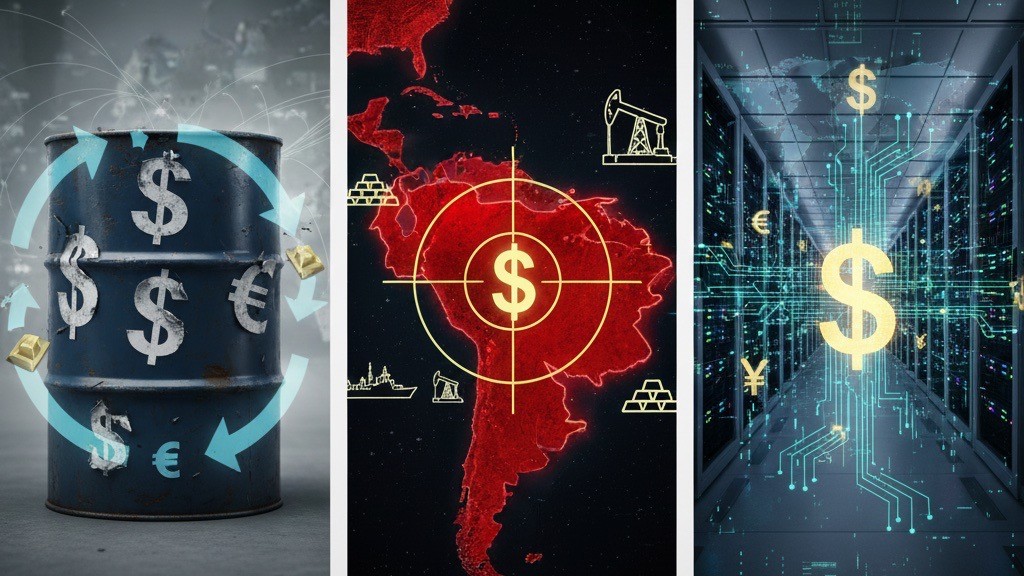
View original article on LinkedInHappy New Year to all my readers! 2026 has started with a major push to the transformation of the global economic landscape. At the heart of this shift is the crumbling of the Petrodollar system, a 50-year-old arrangement where oil is traded exclusively in U.S. dollars. While the mainstream media often focuses on regional instability, the "real reason" behind the recent Venezuelan Raid reveals a desperate attempt to preserve dollar hegemony. The shockwaves of this geopolitical earthquake are now reaching the high-tech sector, fundamentally altering the future of the data center industry.
The Petrodollar: The Invisible Subsidy
Since 1974, the world has operated on an unwritten rule: if you want to buy oil, you must first buy U.S. dollars. This Petrodollar cycle created a permanent global demand for the dollar, allowing the United States to maintain high deficits and low interest rates by recycling these profits back into U.S. Treasuries.
However, the alternative system to the Petrodollar, led by China, Russia, and Venezuela, has begun settling oil trades in alternative currencies like the Yuan, Ruble, and even dollar-pegged stablecoins (USDT). As of early 2026, the breakdown of this cycle means that the invisible subsidy for the U.S. economy is vanishing. For the tech industry, which relies on cheap capital to build massive infrastructure, this represents a structural threat to growth.
The Venezuelan Raid: Geopolitics over Democracy
While US official statements emphasize war on drug cartels, human rights and democracy to justify Maduro's capture, one can also argue that the real reasons for the intensified U.S. military and economic pressure on Venezuela are rooted in resource control and financial defense. Venezuela holds the world's largest proven oil reserves, exceeding even Saudi Arabia, with 17% of known world oil reserves or 303 BN barrels worth US$ 18 TN at $60 per barrel.
The Multi-Front Conflict
- The Currency War: Venezuela attempted to bypass sanctions by selling oil in Yuan and launching the Petro cryptocurrency. To the U.S. Treasury, this was a sanction violation and a blueprint for other nations to exit the dollar system.
- China's Caribbean Foothold: By 2025, nearly 84% of Venezuelan oil was flowing to China. The Venezuelan Raid, manifested through tanker seizures and naval blockades, aims to sever this Energy Silk Road.
- Resource Capture: Control over Venezuelan heavy crude provides a strategic buffer for the U.S., mitigating the risks of chokepoints in the Middle East like the Strait of Hormuz.
The Pivot: Why Data Centers are the New Oil
The collapse of the Petrodollar is happening exactly as the world undergoes a massive capital pivot. In 2025, global investment in data centers surpassed investment in new oil supplies for the first time, reaching $580 BN.
This shift defines the 21st-century economy: Compute is the new energy. If oil was the fuel of the industrial age, "processing power" is the fuel of the AI age. However, these two worlds are inextricably linked. The data center industry is the single largest growing consumer of electricity, and its ability to expand is now directly threatened by the Petrodollar's decline.
Implications for the Data Center Industry
The end of the Petrodollar doesn't just change the currency used at gas stations; it reshapes the physical and financial architecture of the digital world.
1. The End of Cheap AI
Data centers are notoriously capital-intensive. Hyperscalers (Google, Meta, Amazon) rely on the U.S. dollar's strength to borrow billions at low rates to purchase specialized hardware. As the Petrodollar fades, the U.S. must offer higher interest rates to attract investors to its debt.
As a result, the cost of building a 500MW data center campus will significantly increase by 2027. We are moving from an era of limitless digital growth to one of capital discipline.
2. The Euro-Cloud Opportunity: Europe as the Sovereign Data Sanctuary
The collapse of the Petrodollar and the rise of Energy-First data centers doesn't have to mean the flight of technology to the East. While nations like Saudi Arabia and Russia leverage fossil fuels to build new digital empires, Europe sits on a unique Triple-Threat advantage: The Euro, Green Energy, and Legal Stability.
Decoupling from Dollar Volatility
As the Petrodollar fades, the Euro emerges as a stable, sovereign alternative for the digital economy. By denominating data center services, energy contracts, and hardware procurement in Euros, Europe can insulate its tech sector from the inflationary shocks of a devaluing dollar.
Turning Renewables into Digital Gold
Unlike the oil-backed hubs in the Middle East, Europe has the opportunity to lead the world in Sustainable Compute. From the wind-swept coasts of the North Sea to the solar-drenched plains of the Iberian Peninsula, Europe possesses abundant, indigenous renewable energy.
3. Supply Chain Bifurcation and Hardware Inflation
If chips are the new oil, then the supply chain is the new battlefield. The U.S. is attempting to create a Chip Dollar by leveraging its dominance in semiconductor design.
As the dollar weakens, the cost of importing high-end GPUs from Taiwan or raw minerals from Africa increases. Data center operators will face a choice: pay a premium for "Western-secured" hardware or adopt the BRICS-stack of hardware and software emerging from the East.
4. The Rise of Sovereign Clouds
The Venezuelan conflict has proven that the U.S. can weaponize the financial system (SWIFT) and digital assets (Tether). In response, this incentivizes a fragmented industry. Instead of one global internet, we will see the rise of Sovereign Clouds: isolated data center ecosystems designed to operate independently of U.S. sanctions or dollar-based payment rails.
Conclusion: A Multipolar Digital Future
The Venezuelan Raid of January 3rd and the seizure of shadow tankers in Q4 25 are the final gasps of a unipolar world. As the Petrodollar system dissolves, the data center industry is being forced to grow up in a world where energy is expensive, capital is scarce, and geography matters again.
The winners of this new era will not be the companies with the best algorithms, but those who control the Physical Trinity: Energy, Hardware, and Sovereign Land. The digital world is being re-anchored to the physical one, and the struggle over a barrel of oil in the Caribbean is, in reality, a struggle over who will power the servers of the next century.
Related Articles

From Marshall Plan to Data Plan: Spain's Energy Advantage
Spain transforms from being excluded from the Marshall Plan to becoming Europe's data center hub, powered by cheap renewable electricity and massive infrastructure investment.
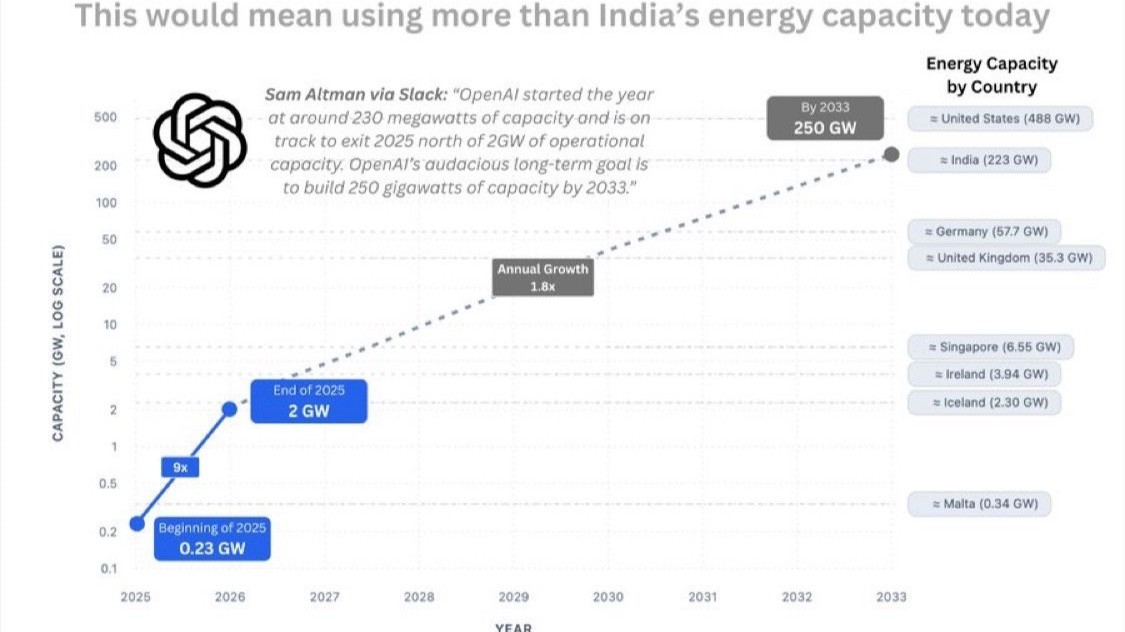
Powering AI: Energy Systems Under Strain & the OpenAI Demand Surge
OpenAI has 9x'd their capacity this year, with a goal to 125x further by 2033, exceeding current energy capacity of India.
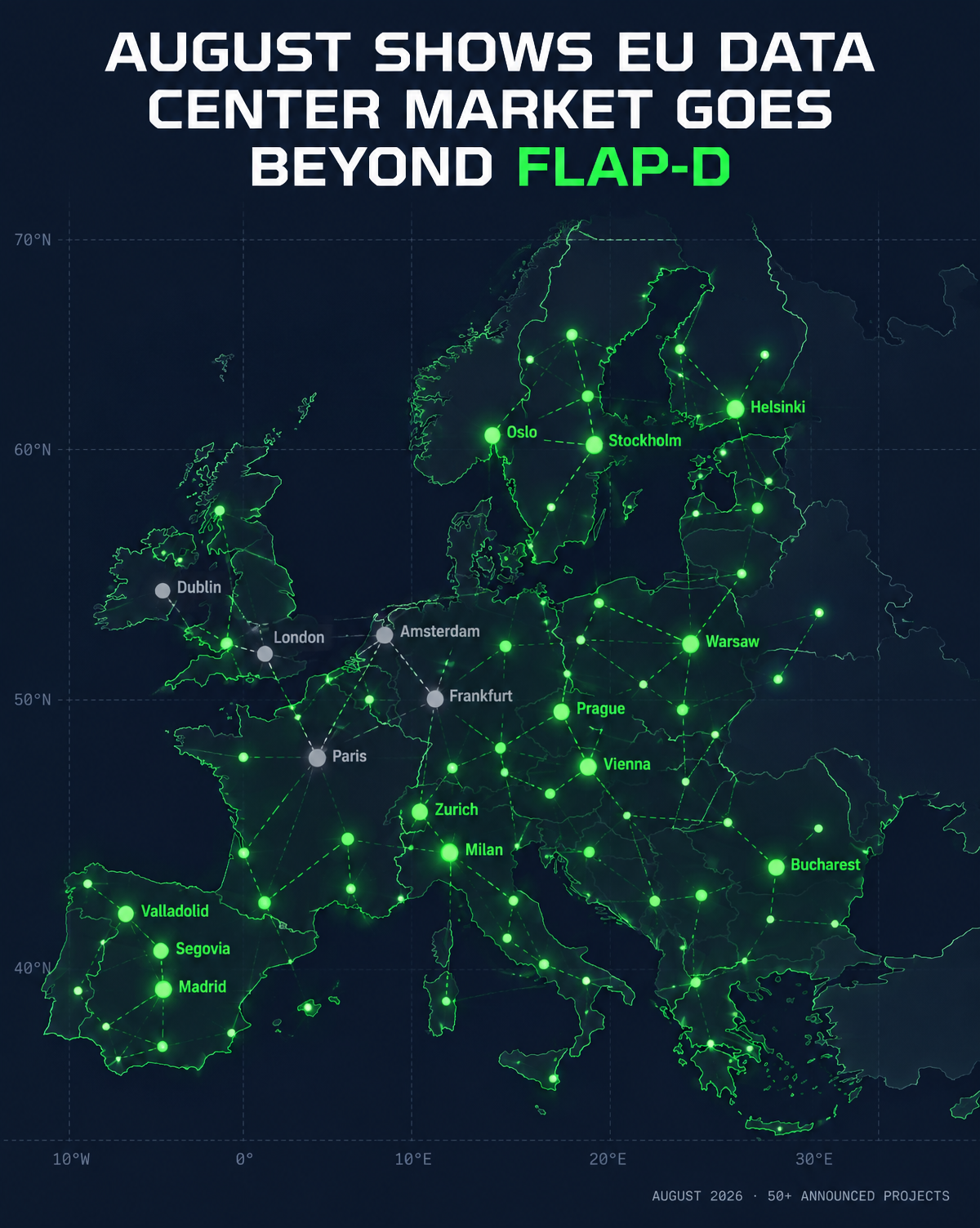
Why Data Sovereignty Matters: Europe's Data Centre Market Is Growing Beyond FLAP-D
August 2026 announcements show capacity moving to the Nordics, Iberia, CEE and the Alps — and increasingly into converted industrial sites. Power, not postcode, now decides where Europe builds.