
Why Edge Data Centers Are the Missing Link in Europe's Digital Infrastructure

Article originally published on LinkedIn
View original article on LinkedInThe digital economy is expanding at record speed. Artificial intelligence, cloud services, and high-performance computing are pushing data center demand to unprecedented levels. But behind the growth lies a constraint that no amount of capital can easily overcome: electricity supply.
A June 2025 report from Ember estimates that European data center power demand will nearly triple by 2035 — from 96 TWh in 2024 to 236 TWh. In major hubs like Amsterdam, Frankfurt, London, and Dublin, data centers already account for a third or more of local electricity use. In Dublin's case, almost 80% of grid capacity is tied to data centers. Connecting a new hyperscale facility in these congested regions can take 7–10 years — sometimes as long as 13.
How can Europe meet this demand without collapsing its grids? The answer may lie in edge data centers.
What Is an Edge Data Center?
Unlike massive hyperscale campuses, edge data centers are smaller, decentralized facilities located closer to both end users and power sources. They offer three key advantages:
- Faster deployment – Grid connections can be secured in 12–18 months, versus 7–10 years for hyperscale hubs.
- Lower footprint – They require less land, construction, and upfront capital.
- Strategic flexibility – They can be placed in regions with available grid capacity, bypassing saturated hubs.
Heat Reuse: Turning Waste into Value
Every kilowatt consumed by a data center becomes heat. In hyperscale sites far from population centers, this energy is usually lost. But edge facilities, built within or near communities, can convert waste heat into a resource:
- In Zurich, a research data center covers 80% of heating demand for a university building.
- In Finland, edge data centers supply district heating to hundreds of homes.
- In Amsterdam, a Vattenfall–data center partnership is set to deliver 100 GWh of heat annually, cutting 65,000 tonnes of CO₂ per year — the equivalent of 20,000 households moving off natural gas.
- In Groningen, an edge data center now heats a public swimming pool, saving 50,000 m³ of gas annually.
This model is almost impossible to scale at hyperscale sites located 40+ km away from cities. Edge data centers make heat reuse practical and locally impactful.
Where Growth Will Happen
According to Ember, growth in emerging European hubs (Nordics, Iberia, Eastern Europe) will reach +110% by 2030, while traditional hubs (FLAP-D) will grow only +55% due to grid constraints.
This is already influencing investment flows:
- Southern Europe is attracting attention for its solar-rich generation mix and available land.
- The Nordics are capitalizing on abundant renewables and supportive regulation.
- Edge deployments provide the bridge, enabling digital infrastructure to grow without waiting a decade for new transmission lines.
Edge and AI: A Natural Fit
AI workloads make the case even stronger.
- Training large models requires hyperscale clusters.
- Inference — running those models in real time — benefits from proximity to users.
Applications such as autonomous driving, industrial IoT, AR/VR, and smart cities cannot tolerate latency from routing all traffic to a distant hyperscale facility. Edge centers enable real-time responsiveness, expanding what AI can deliver to businesses and citizens.
Financing Edge: More Options, Faster Returns
Building hyperscale data centers demands billions in capital and a 7–10 year return horizon. Edge facilities, by contrast:
- Require tens of millions, not hundreds.
- Attract financing from municipalities, utilities, and mid-size infrastructure funds.
- Deliver faster payback through community benefits (heat reuse, job creation) and shorter build cycles.
This makes edge more financially agile, not just operationally agile.
Conclusion
Edge data centers are not a "nice to have." They are a strategic necessity for Europe's digital future.
They: - Relieve grid bottlenecks. - Enable faster deployment. - Turn waste heat into community value. - Support AI applications requiring low latency. - Open digital infrastructure investment to a broader pool of capital.
The future of European data centers will not be won by size alone. It will be shaped by agility, proximity, and sustainability. Edge centers deliver all three.
Related Articles

What is a Data Center? The Five Pillars of Europe's Digital Future
Data centers are the backbone of the digital economy — the factories of the 21st century — representing a market worth over $1 trillion globally.

Are We Building the Next Bubble in Data Infrastructure?
AI capex is reshaping economies, but is construction running ahead of sustainable revenue? An analysis of the $800B gap between infrastructure investment and revenue generation.
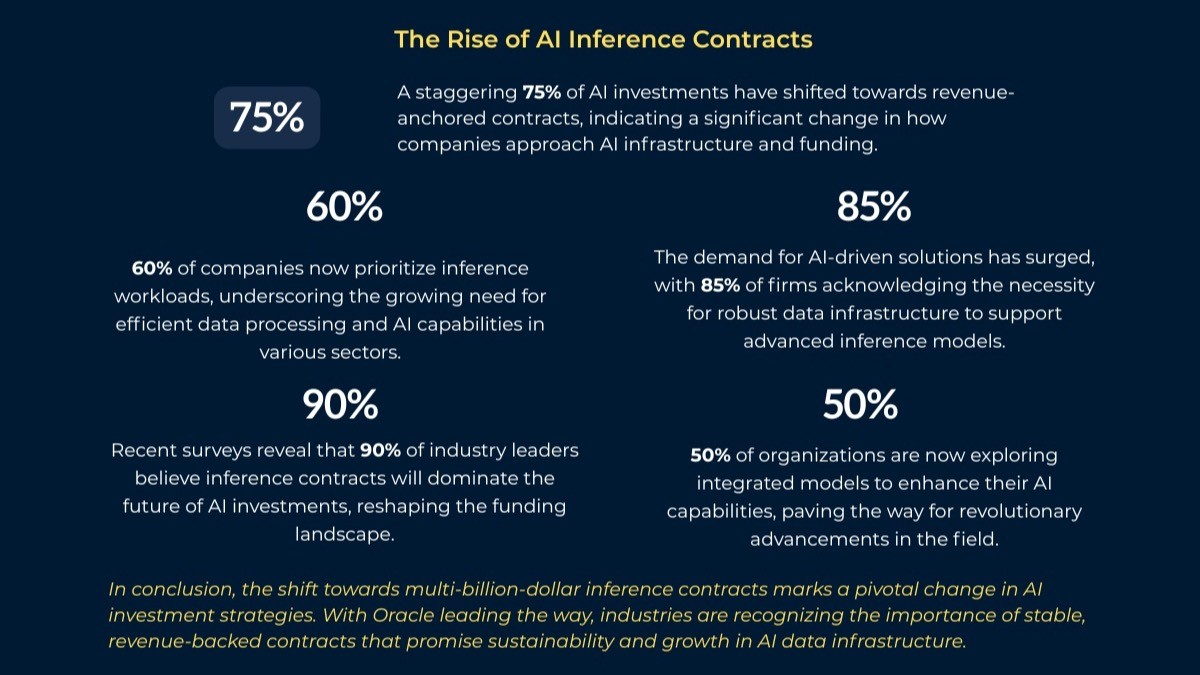
Oracle's $300B Bet — Why AI Infrastructure Revenues May Be More Solid Than Critics Think
Oracle's $300B deal with OpenAI and the rise of multi-billion-dollar inference contracts are anchoring AI infrastructure revenue models, countering the bubble narrative.