
Agents, Infrastructure & the AI Backbone: Why Data Centers Will Power the Agent Era
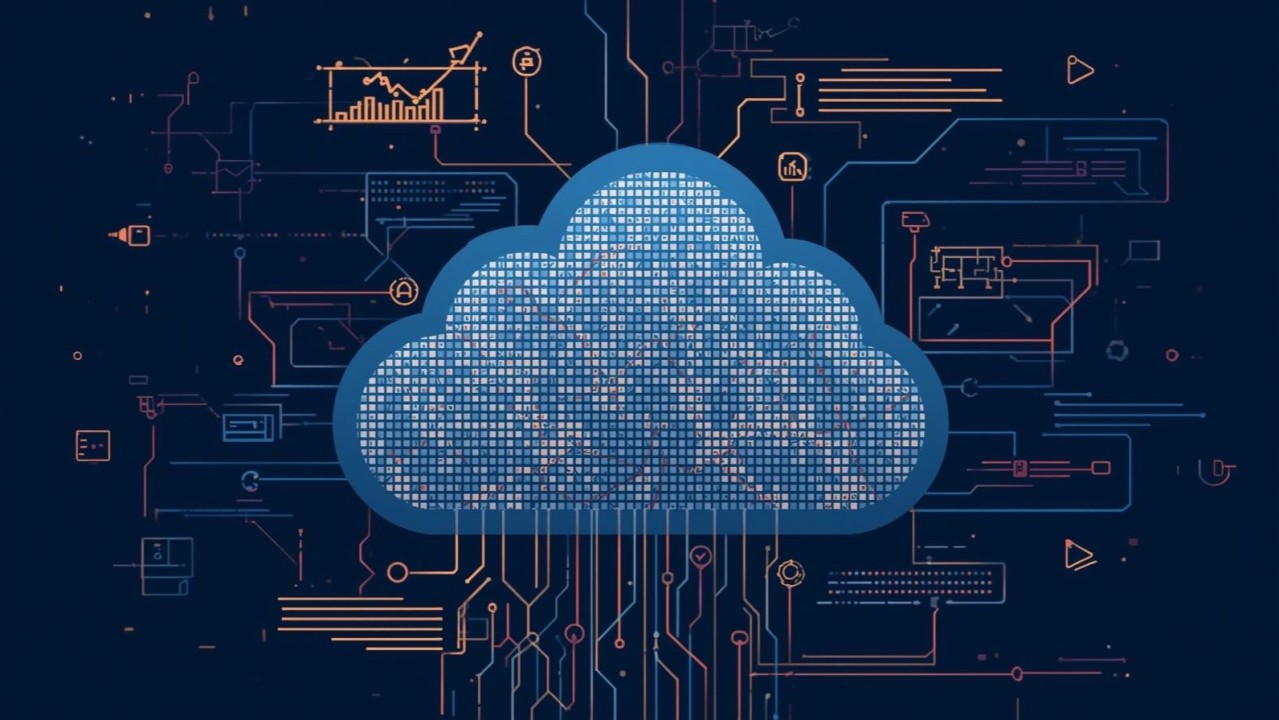
Article originally published on LinkedIn
View original article on LinkedInOpenAI's held last week, on Monday 6th, their third annual developer's day at Fort Mason in San Francisco. The recent announcements of that day are a shift in AI architecture, toward autonomous agents that reason, act, and integrate across systems. These agents will place new demands on infrastructure: existing and yet to be launched start-ups and SMEs will be launching niche agents for a very well defined task where the start-up and the SME has a super well defined expertise and client base. This massive upcoming demand is not modeled yet on the economic debate on AI bubble, which is mostly looking into the big LLM contracts with a top-down approach. But how about the bottom-up analysis?
This is why data center ownership isn't just about wires and servers — it's about control over the operating system of the AI future.
What OpenAI Is Building: From Models to Agents
Let's review what's already public:
- In March 2025, OpenAI launched a set of tools and APIs — including the Responses API, Agents SDK, and observability tools — making it easier for developers to build agentic applications.
- The Agents SDK, initially in Python, now also has a TypeScript version, and supports features like handoffs, guardrails, tracing, and voice/real-time agent primitives.
- Real-world adoption is already showing up. Cloudflare is combining its durable objects runtime with OpenAI's Agents SDK to enable persistent agents that maintain memory and coordinate workflows.
- In parallel, OpenAI continues evolving its product roadmap. CEO Sam Altman has discussed simplifying and unifying model families (GPT + o-series) and planning GPT-5's release in the near term.
- On the hardware front, OpenAI is securing compute in scale. A recent $100B partnership with NVIDIA is targeting multiple gigawatts of infrastructure, including the Vera Rubin architecture.
These layers—product (agents), orchestration (SDKs), compute (GPU deals)—stack on infrastructure. They do not replace it.
Why Agents Expand the Infrastructure Frontier
Agents differ from standard model inference in these key ways:
Persistence & State
Agents must manage memory, context, partial execution states, and long-running workflows. Persistent storage and fast read/write access become essential.
Low Latency & Locality
When an agent must "act" in real time (interact with APIs, IoT devices, user input), latency matters. Edge compute and local presence will often outperform centralized hubs.
Continuous Compute
Rather than bursts of inference, agents may operate continuously, reacting to triggers and maintaining readiness. Always-on load is a new baseline.
Tool Orchestration
Agents will call other systems (database queries, external APIs, actuators). The network fabric, orchestration platforms, and execution environment become critical.
Resilience & Isolation
An agent executing actions (booking, routing, triggering events) demands fault tolerance, isolation, rollback logic, and security sandboxing.
Considering all the above, data centers won't just host models: they become brains, memory banks, routers, and risk controllers.
European Implications & Infrastructure Opportunity
Europe's data center expansion is well underway, but much of the new capacity is still optimized for standard inference workloads. The agent era changes the game.
- To support agentic AI, Europe needs strategic infrastructure layering: hyperscale hubs + edge nodes + fast fiber and interconnect.
- Ownership and control matter more: who owns the edge nodes, who controls interconnect switches, who controls memory caches?
- European operators already investing in AI-ready infrastructure (for instance, MERLIN Properties + Edged in Spain, Data4 France) are better positioned to host agent workloads.
- Sovereign strategies must consider not only compute capacity but compute orchestration and context layers.
As Europe races to build AI capacity, it must not just host the agent era — it must own the orchestration, the memory, and the decision layer.
What's Next? Roadmap & Speculation
Based on public signals and industry whispers, here's what may arrive next:
- GPT-5 will likely unify reasoning, integrate o-series logic, and eliminate the fragmented "model picker" approach.
- OpenAI may eventually deprecate the Assistants API and shift fully to Responses API + Agents SDK as the unified agent platform.
- Hardware scaling: the OpenAI - NVIDIA deal will deploy tens of gigawatts across new campuses; infrastructure decisions about cooling, power, and localization will become competitive advantages.
- Agent training frameworks will evolve: new research like Agent Lightning, which decouples agent execution from training workflows, suggests a future of modular, reusable agent infrastructure.
- The Model Context Protocol (MCP) is gaining adoption as a potential standard for interoperability between agents, tool APIs, and runtime environments.
If these trends continue, the infrastructure race will shift from raw scale to flexibility, locality, and orchestration control.
Final Thought
The next AI frontier isn't just about parameter count or scale — it's about autonomous agents acting in the real world. And these agents demand infrastructure that is persistent, responsive, distributed, and controlled.
In that world, data center ownership will decide who builds the nervous systems of tomorrow's AI. Next week, we will analyze the ownership legal structures to understand who really owns the cloud.
Related Articles
Are We Building the Next Bubble in Data Infrastructure?
AI capex is reshaping economies, but is construction running ahead of sustainable revenue? An analysis of the $800B gap between infrastructure investment and revenue generation.

Why Edge Data Centers Are the Missing Link in Europe's Digital Infrastructure
European data center power demand will nearly triple by 2035. Edge data centers offer faster deployment, heat reuse, and strategic flexibility to meet this demand without collapsing grids.
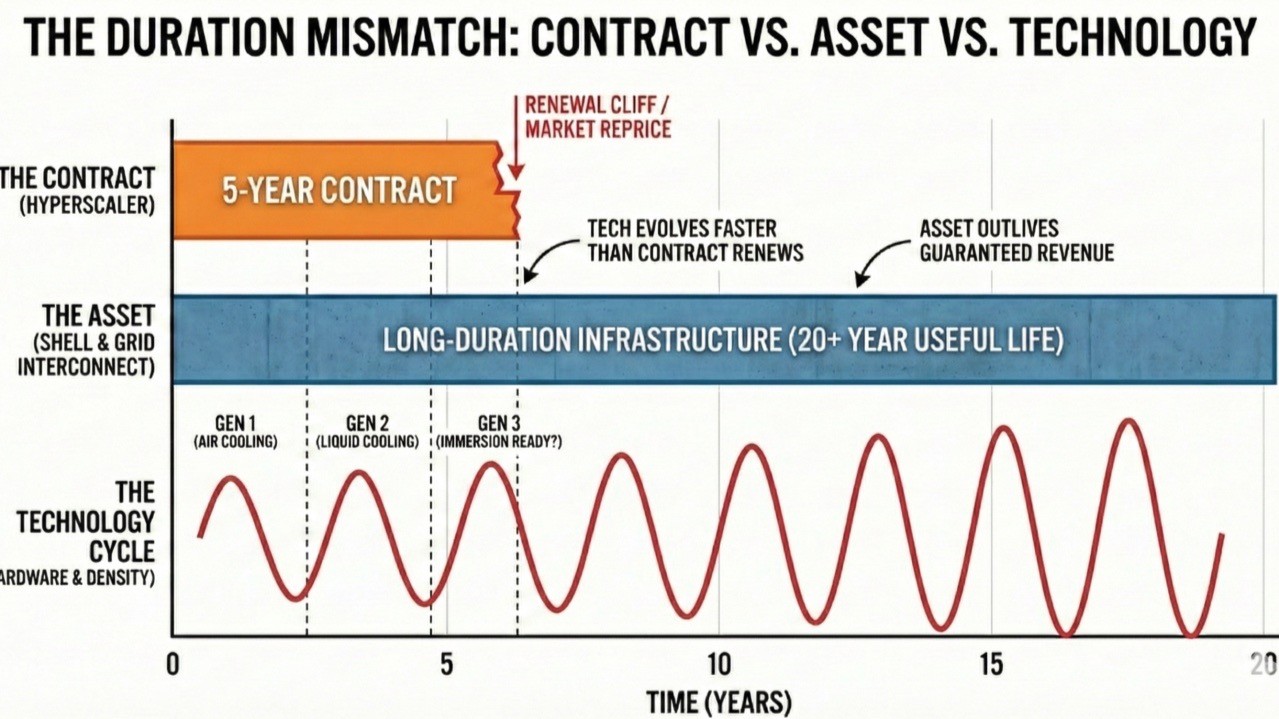
The Trillion-Dollar Illusion: Why Data Centers Aren't the Next Renewables
The AI revolution has inverted the asset class. We are no longer building real estate; we are building rapidly depreciating industrial machinery inside a concrete box.