
Why War on Middle East Makes of Spain the Favourite to Win the World Cup of AI Infrastructure and Capital Deployment
Article originally published on LinkedIn
View original article on LinkedInFor years, digital infrastructure was treated as something almost abstract. Data moved across regions, workloads shifted between zones, and cloud dashboards replaced geography with dropdown menus. The implicit assumption was that infrastructure existed outside of conflict and such assumption is now being challenged by reality.
The recent escalation between the United States and Israel against Iran and Lebanon, and the Iranian retaliation against EUA neighbours is redefining geopolitical alignments. What is new with this recent escalation is that digital infrastructure is becoming part of the landscape of conflict.
In the Gulf, Iranian drones and missile systems have already demonstrated their reach. Energy assets had been targeted before, but what is different now is the exposure of another layer: data centers. Facilities that were designed to be invisible, purely economic, purely technical, are now within range of geopolitical tension. In at least one instance, infrastructure supporting cloud operations experienced disruption following an attack, forcing a reconsideration of what resilience actually means.
The Spanish Position
At the same time, Spain has taken a position that stands out within the current alignment of Western powers. Rather than following a fully synchronized posture with the United States and Israel, it has opted for a more cautious, critical stance, emphasizing de-escalation and distancing itself from direct involvement. The reaction has been immediate. Israel's rhetoric toward Spain has hardened, and the diplomatic temperature has risen in a way that would have seemed unlikely only months ago. Harsh words of Prime Minister Netanyahu on Friday 10th against Spain set a new tone for the relationship.
On the surface, this may appear as a political divergence. But it also reflects something deeper: a different positioning in a world that is becoming more fragmented.
Spain, under leadership of socialist Prime Minister Sánchez, is beginning to occupy a space that combines regulatory rigor, relative political stability, and a degree of strategic distance from the most active theaters of conflict. This is the same approach taken by Prime Minister Sánchez to de-escalate the Catalan conflict when he took power in 2019. And, in the context of AI and digital infrastructure, existence or absence of conflict makes the difference.
Why Physical Conflict Matters if Data is Supposed to Flow Around
For more than a decade, cloud infrastructure has been built on the premise of geographic abstraction. Regions existed to optimize latency and cost, not to reflect political risk. Redundancy strategies assumed that workloads could fail over seamlessly from one location to another. But this logic depends on the critical condition infrastructure itself is not a target. The systemic political risk used to compute the Weighted Average Cost of Capital, WACC, for corporate finance decision-making was irrelevant. What mattered was the intrinsic operational risk.
This classic MBA framework, where the underlying assumption was that capital could always be safely stored on T-Bonds and private projects needed to provide a return premium to make up for the marginal risk, is fading away. To start with, the value of dollar is in constant decline against other currencies.
And when a data center in the Gulf can be affected by a drone strike, "region selection" stops being a technical or commercial choice and becomes a strategic one that impacts the project's WACC and, therefore, the Net Present Value of the project's Discounted Cash Flows. It is no longer enough to ask where compute is cheapest or fastest. The question becomes where it is safest, most stable, and most controllable to reduce WACC.
This is where the concept of sovereignty, often discussed in regulatory terms, takes on a different meaning. Sovereignty is certainly about compliance and data protection, and now also about geopolitical risk exposure. If critical systems depend on infrastructure located in regions that can be disrupted by geopolitical events, then those systems inherit that risk. And that risk is not theoretical. We've watched these past weeks that this risk is real and operational.
The Position of Europe
Europe finds itself in a complex position within this shift. It remains deeply connected to global cloud providers, benefiting from their scale and capabilities, while at the same time advancing regulatory frameworks that emphasize control, transparency, and accountability. For some time, this tension could be managed. Now, it is becoming more difficult to ignore.
Spain, in particular, sits at an interesting intersection of these dynamics. It is part of the European regulatory framework, aligned with standards such as GDPR, NIS2, and the AI Act. At the same time, it is geographically positioned outside the most immediate zones of escalation and is increasingly perceived as the most stable environment within Southern Europe. As an example, a Rotary Summit that was expected to take place in Dubai on May 2026 has been relocated to Barcelona.
In a context where parts of the Middle East are experiencing direct infrastructure risk, and where Northern European hubs face capacity constraints close to the Ukraine war, the Spanish positioning acquires a new relevance. It suggests that the map of digital infrastructure may begin to reorganize around factors that go beyond traditional metrics.
Spain has built 3 strong advantages: abundant renewable energy, international connectivity and advanced legislation to unlock grid blockages caused by permit speculation (I refer to RDL 7/2026, entered into force March 21st 2026). And now we receive a new advantage that will matter even more: political stability and lack of military conflict.
This does not imply a retreat from global infrastructure. The cloud will remain essential, and distributed architectures will continue to define how systems are built, with data centers erected everywhere to bring the new digital backbone close to economic powerhouses. But the balance is shifting. Organizations are starting to reconsider where their most critical workloads should reside, and under what conditions they should operate.
Sovereign infrastructure, in this context, is not a political slogan. It is a way of managing exposure and attracting capital and talent. It involves deploying governance and key systems in environments where control is higher, dependencies are reduced, and the physical and legal context is understood.
What we are beginning to see is the early outline of a new geography of compute. Not defined solely by latency or cost, but by a combination of stability, control, and resilience.
Who knows when the escalation between Iran, the United States, and Israel will be resolved. The consequences of this last escalation will extend beyond diplomacy and military positioning, shaping how infrastructure is perceived, deployed, and protected.
Until de-escalation there is a massive opportunity for Southern Europe to attract capital and build AI infra. Spain and Italy are at the forefront to capture this opportunity. Spanish Prime Minister Sánchez is the leading international voice against war in Iran and Italian Prime Minister Meloni has distanced herself from her ally President Trump and taken side with Mr Sánchez. Spain has a stronger renewable energy park than Italy and a better regulatory framework (there is nothing like article 11 of RDL 7/2026 in Italy to curb speculation and grid congestion down).
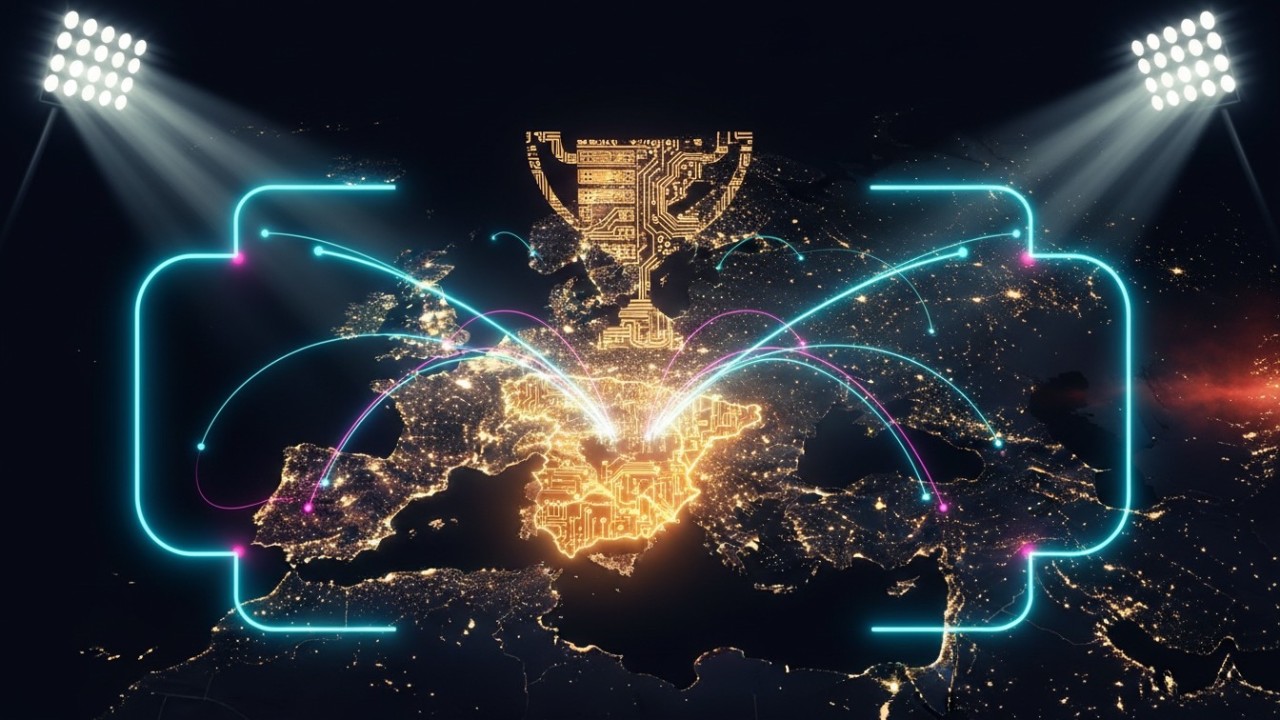
Like in the upcoming World Cup, Spain is favourite to win the World Cup of AI infrastructure and capital deployment.
Related Articles
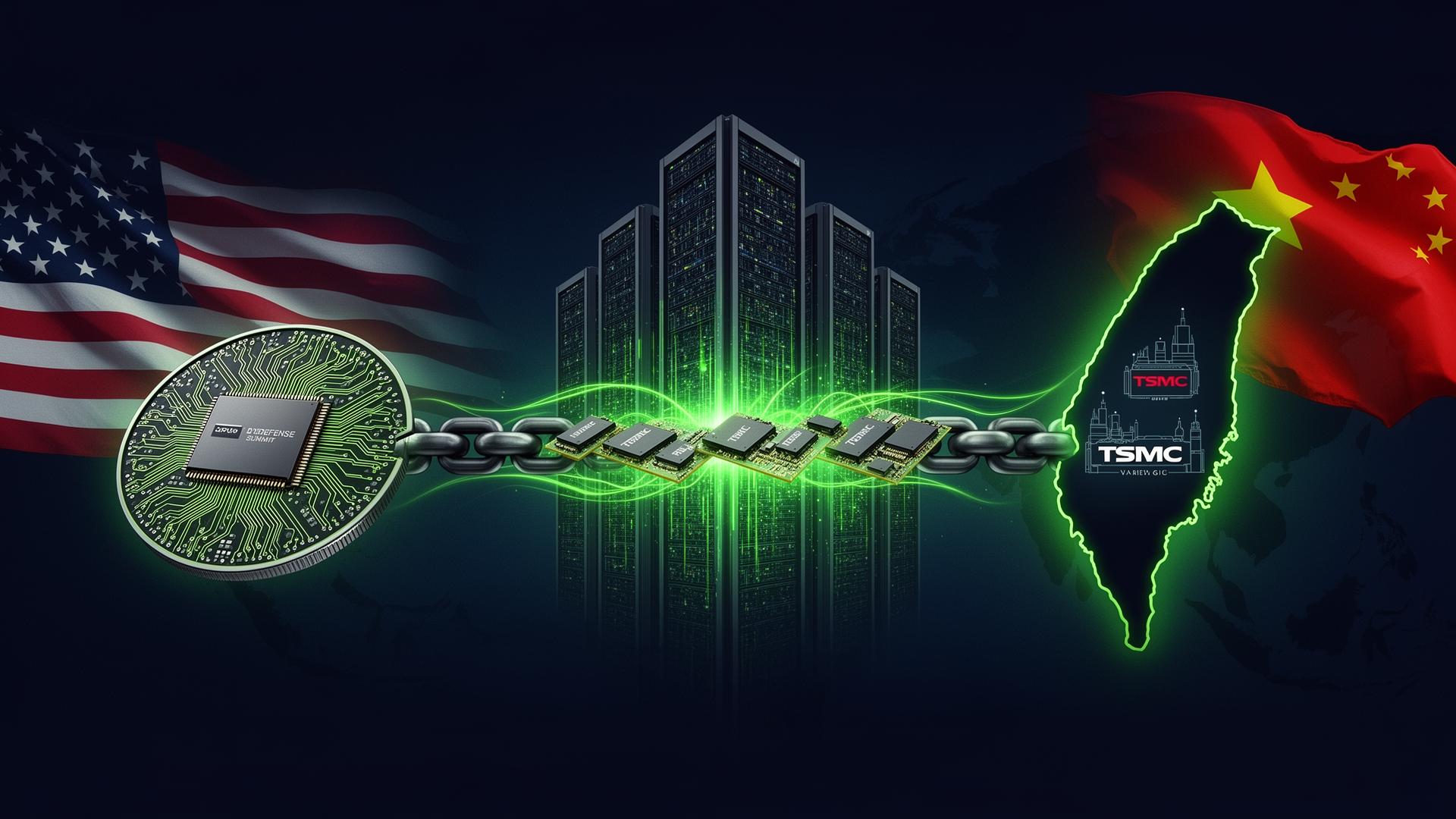
Trump in Beijing, Taiwan on the Table: What the Silicon Value Chain for GPUs Means for Data Centers and AI
Trump's visit to Beijing this week put Taiwan back at the center of the US-China conversation. The silicon value chain for GPUs runs through a single island — and every data center build and AI roadmap in the West depends on how that conversation lands.

From Builders to Owners: Spain's Choice in the AI Data Center Boom
Spain is living through an unprecedented moment in digital infrastructure. The question is: will Spain merely host the buildings, or capture the value that flows through them?
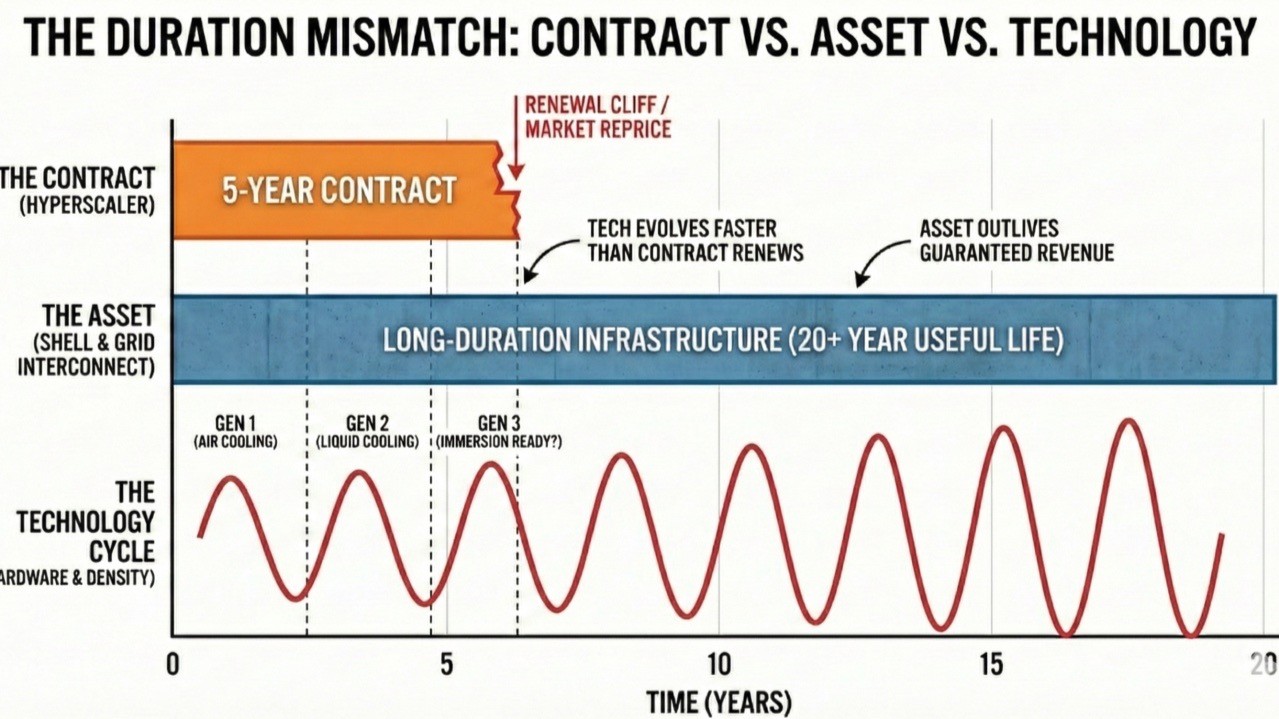
The Trillion-Dollar Illusion: Why Data Centers Aren't the Next Renewables
The AI revolution has inverted the asset class. We are no longer building real estate; we are building rapidly depreciating industrial machinery inside a concrete box.