Trump in Beijing, Taiwan on the Table: What the Silicon Value Chain for GPUs Means for Data Centers and AI
Article originally published on LinkedIn
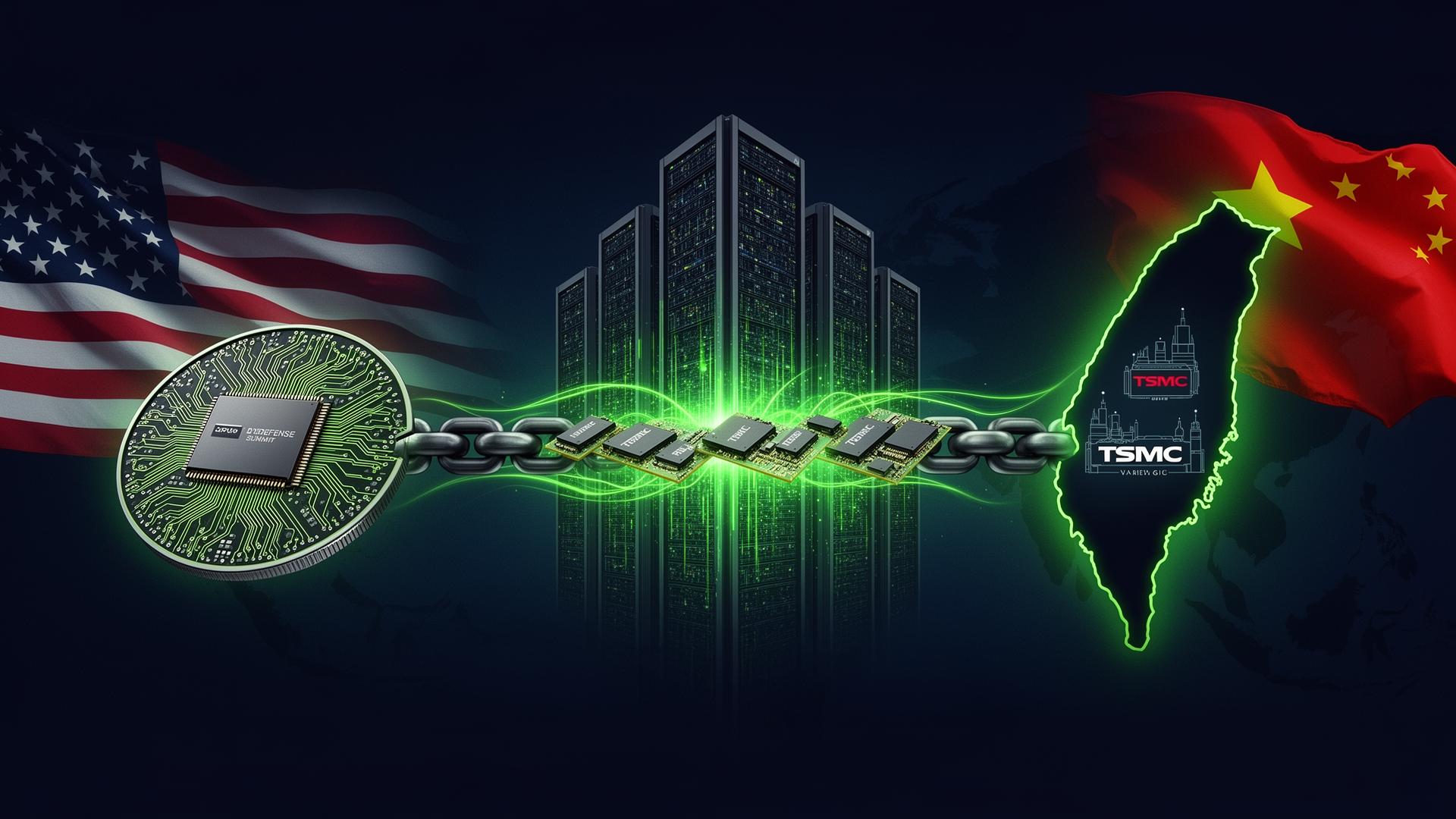
View original article on LinkedInTrump landed in Beijing this week and, predictably, Taiwan was on the table. What was less covered in the headlines is that the conversation about Taiwan is, in operational terms, a conversation about the silicon value chain for GPUs — and therefore about every data center being planned in the West and every AI roadmap built on top of them.
This is the discussion the Data Defense Summit was created to surface. Not the geopolitical theatre, but what it means for the people actually approving capex on AI factories, signing PPAs for new sites, and committing to multi-year GPU allocations.
One island, one process node, one bottleneck
The numbers are now well known but rarely placed next to each other.
Roughly 90% of the world's most advanced logic chips — anything at 5nm or below — are manufactured in Taiwan. TSMC alone fabricates the silicon behind essentially every NVIDIA H100, H200, B100 and B200 GPU shipping into hyperscaler and sovereign AI data centers. AMD's MI300 series, Google's TPUs, and the custom accelerators from AWS and Microsoft all converge on the same handful of fabs in Hsinchu and Tainan.
The GPU supply chain is not a chain. It is a funnel. Designs from California, lithography from the Netherlands, photoresists from Japan, packaging that increasingly relies on CoWoS capacity that TSMC has spent two years scrambling to expand — all of it routes through one island that sits 130 kilometers from the Chinese coast.
Every gigawatt of new AI data center capacity announced for 2026 and 2027 — in Virginia, in Madrid, in the Nordics, in the Gulf — is implicitly a bet that this funnel keeps flowing.
What Beijing actually wants from Washington
Strip away the diplomatic language and the Chinese position on Taiwan has not moved. What has moved is the leverage. China today controls a different chokepoint: the refining and processing of gallium, germanium, and the rare earths that go into power electronics, cooling systems, and the magnets inside every server fan and every wind turbine powering a green data center campus.
Beijing's export controls on gallium and germanium in 2023, expanded in 2024 and again in 2025, were not about the materials themselves. They were a demonstration that the dependency runs both ways. The message to Washington in this week's meetings is straightforward: tighten semiconductor export controls further and the cost will be paid in the materials that keep American and European data centers running.
The Trump administration's response so far has been to negotiate, not escalate. That is significant. It suggests Washington has internalized what the industry already knows — that a hard decoupling on silicon, in 2026, breaks the AI buildout before it breaks China.
Why this lands directly on the data center P&L
Three concrete consequences for anyone planning AI infrastructure in the next 24 months:
1. GPU lead times are a geopolitical variable, not a procurement one. A single incident in the Taiwan Strait — a blockade exercise, a cable cut, an export licence dispute — does not stop GPU production for a week. It stops it for quarters. Every project finance model assuming a steady ramp of H200 and B200 deliveries through 2027 is implicitly pricing zero probability on an event that the US Indo-Pacific Command, the Taiwanese government, and TSMC's own continuity planning all treat as non-zero.
2. Power electronics and cooling have their own China exposure. The conversation about supply chain risk has fixated on the GPU itself. But a 100 MW AI data center contains thousands of components — IGBTs, transformers, busways, immersion cooling fluids, magnets — where Chinese share of the upstream value chain ranges from material to dominant. The silicon discussion in Beijing this week is the visible part. The materials discussion is the part that quietly determines whether your site energizes on schedule.
3. Sovereign AI stops being a slogan and starts being a hedge. If GPU supply is concentrated on one island and material supply is concentrated in one country, the only operational answer is to diversify what you can control: where the data centers sit, who owns them, which jurisdiction governs the workloads, and how quickly you can reallocate capacity if a region goes offline. This is the case for European and Iberian AI factories that we have been making for two years. This week made it cheaper to make.
What TSMC Arizona and Dresden actually solve
TSMC's Arizona fabs and the European fab projects in Dresden and Magdeburg are real, but they are not a substitute. Arizona will produce N4 and eventually N3 — important for compute, but trailing the leading edge by one to two nodes. The advanced packaging that turns a die into an H200 — CoWoS, SoIC — remains overwhelmingly Taiwanese for the rest of this decade.
So when a CIO in Madrid or Milan asks whether the GPU shortage will resolve by 2027, the honest answer is: it will resolve only if Taiwan keeps shipping. Every other scenario is a discount factor on the AI roadmap.
The Data Defense Summit angle
This is why we built the Data Defense Summit around the intersection of geopolitics, energy, and compute. Not because we want to talk about war games, but because the people approving European data center investments need a framework that puts Taiwan, gallium, grid permits, and PUE on the same page.
Three positions are worth holding simultaneously:
- The Taiwan funnel is structural for this decade. Anyone telling you it will be diversified by 2028 is selling a fab, a fund, or a foreign policy.
- Material chokepoints are symmetric. The silicon side is loud; the gallium, germanium, neodymium and graphite side is quiet and equally binding.
- Sovereignty is a portfolio decision. It is not about leaving the hyperscalers. It is about ensuring that a Taiwan Strait incident does not collapse your AI strategy, your compliance posture, and your customer commitments in the same quarter.
Trump's visit to Beijing is one chapter of a much longer negotiation. The data centers being permitted, financed, and energized in Iberia, Italy and the Nordics over the next 36 months will be the infrastructure that determines whether Europe has any independent AI capacity at all when the next chapter is written.
The conversation about Taiwan is the conversation about your GPUs. The conversation about your GPUs is the conversation about your data centers. And the conversation about your data centers is, finally, the conversation about whether the AI you deploy in 2027 is something you control or something you rent from someone whose supply chain you do not.
That is the conversation the Data Defense Summit exists to host.
Related Articles
Why War on Middle East Makes of Spain the Favourite to Win the World Cup of AI Infrastructure and Capital Deployment
As geopolitical conflict reshapes the map of digital infrastructure, Spain emerges as the safest, most stable environment for AI deployment in Southern Europe — combining renewable energy, regulatory reform, and political distance from active theaters of conflict.
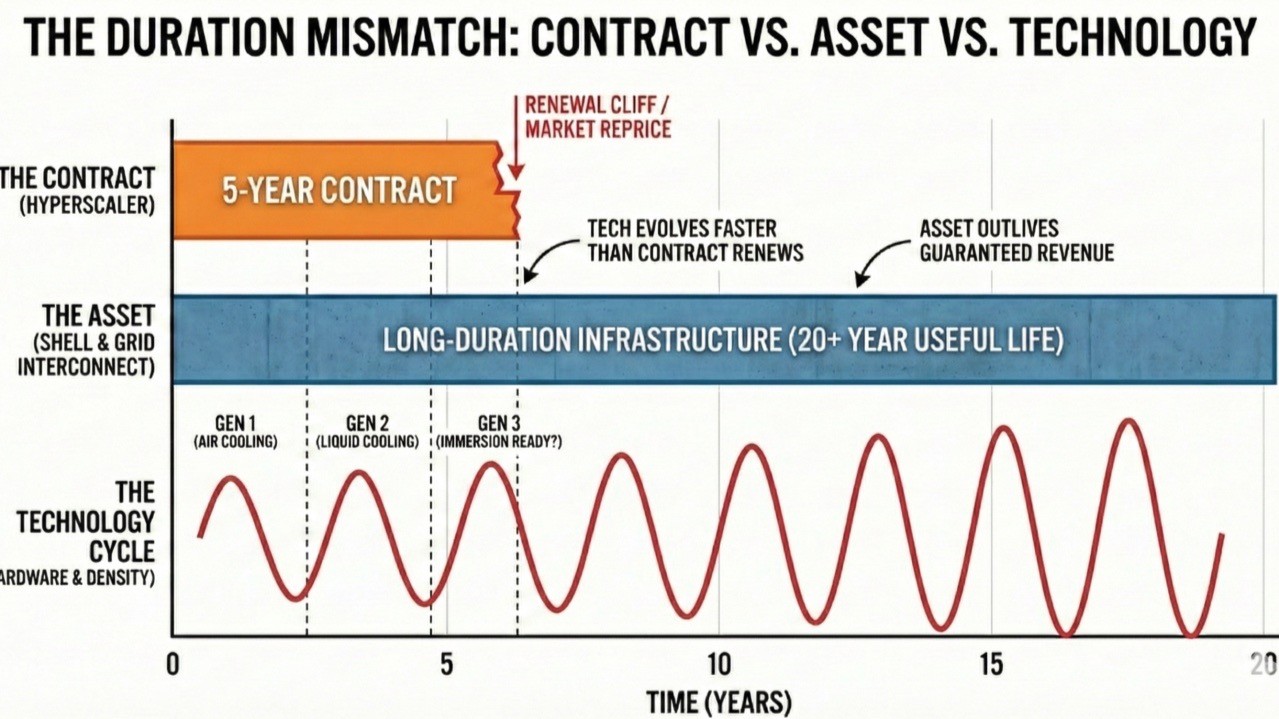
The Trillion-Dollar Illusion: Why Data Centers Aren't the Next Renewables
The AI revolution has inverted the asset class. We are no longer building real estate; we are building rapidly depreciating industrial machinery inside a concrete box.
Are We Building the Next Bubble in Data Infrastructure?
AI capex is reshaping economies, but is construction running ahead of sustainable revenue? An analysis of the $800B gap between infrastructure investment and revenue generation.