Who Owns the Cloud? Europe's Battle for Digital Sovereignty
Article originally published on LinkedIn
View original article on LinkedInLast week, it was confirmed one of the largest data center transactions in history: BlackRock, Global Infrastructure Partners (GIP), and MGX have acquired Aligned Data Centers from Macquarie Group in a deal valued at $40 billion.
At first glance, it looks like another record-breaking infrastructure acquisition. But it's more than that. It's a clear signal that control of digital infrastructure — not just capital — has become a strategic priority.
The world's largest asset managers and infrastructure funds are no longer simply financing the data economy. They are buying its foundations: the land, the grid connections, the power purchase agreements, and the physical assets where AI lives.
Ownership as Strategy
In the public debate around AI and software, most attention goes to the algorithms and applications. Yet the real leverage sits one layer deeper — in who owns and controls the data centers that power those systems.
Ownership determines more than yield. It defines:
- how facilities are financed and taxed,
- how lease agreements are structured,
- and crucially, how much sovereignty governments and companies retain over their data.
A data center is not simply a warehouse filled with servers. It's an energy-hungry, always-on facility that functions like strategic infrastructure, closer to a power plant or an airport than a logistics shed. Once a data center is operational, it becomes embedded in a country's digital and energy systems. Contracts typically last 10–20 years, and shutting down operations can jeopardize national or corporate continuity.
That's why ownership has become a matter of national security and economic policy.
The Legal and Financial Framework of Control
In Europe, data centers exist at the intersection of energy law, telecommunications regulation, and real estate investment frameworks. This complexity shapes who can own and operate them, and who benefits from them.
- REITs (Real Estate Investment Trusts) in the U.S. provide tax transparency and liquidity for investors.
- SOCIMIs in Spain, SIICs in France, and SIIQs in Italy are the local equivalents, designed to mobilize domestic capital for long-term infrastructure.
- Infrastructure Funds and Pension Vehicles, like Brookfield, Macquarie, KKR and EQT Group enjoy patient, multi-decade capital, enabling them to acquire or consolidate platforms quickly.
What's emerging is a new ownership hierarchy, where control is determined not by technological innovation but by financial structure and jurisdictional reach.
For Europe, this raises key questions about digital sovereignty. If hyperscalers lease most of their capacity — as they do — and global funds own most of the infrastructure, then the European cloud runs on foreign-controlled assets, regardless of where they're located.
Fragmenting Control, Converging Capital
The Aligned acquisition is not an isolated event; it's part of a global pattern.
- In France and Italy, Brookfield's Data4 has expanded into one of Europe's largest developer-operators, combining hyperscale-ready land banks with renewable PPAs.
- In the Nordics, EQT-backed GlobalConnect integrates fiber networks, renewable power, and data centers into a single vertically aligned ecosystem.
- In Spain, MERLIN PROPERTIES the country's largest SOCIMI, has partnered with Edged Energy to develop AI-ready campuses in Madrid, Barcelona, and Bilbao — bringing local capital into the digital infrastructure race.
- Across the Atlantic, KKR, GIP, and Brookfield continue to dominate U.S. expansion, buying capacity faster than it can be permitted.
Together, these deals reveal a consistent logic: acquiring power, land, and entitlements is now more valuable than developing from scratch.
In congested grid markets like Frankfurt, London, or Dublin, obtaining new capacity can take up to a decade. Buying an operator with pre-secured infrastructure rights short-circuits that bottleneck — and locks in long-term energy access.
The Five Families of Cloud Ownership
Ownership in today's data economy falls broadly into five categories:
Hyperscalers: Amazon, Microsoft, Google, Meta. They build their own campuses in strategic regions; lease elsewhere for flexibility.
Colocation Providers: Equinix, NTT, Telehouse. They operate multi-tenant facilities; monetize interconnection between clients.
Developer-Operators: Compass, STACK, DATA4, EdgeConneX. They secure land, power, and entitlements; pre-lease or sell to hyperscalers.
REITs / SOCIMIs / SIICs: Digital Realty, Iron Mountain, Merlin Properties. They offer public market access and liquidity, creating a benchmark for asset and industry valuations.
Infra Funds & Private Equity: BlackRock, Brookfield, Macquarie, EQT, KKR, GIP. They consolidate and scale regional operators, capturing long-term yield and influence.
This ecosystem creates both opportunity and dependence. While capital availability accelerates Europe's buildout, it also introduces foreign concentration risk, particularly when ownership structures are opaque or jurisdictionally distant.
Why Ownership Matters for Europe
If hyperscalers build, they internalize the value chain. If infrastructure funds dominate, the economic rents flow abroad. If local investment vehicles (SOCIMIs, SIICs, pension-backed trusts) participate, profits, expertise, and strategic control remain within Europe.
The EU's evolving legal framework, including the Digital Markets Act (DMA) and AI Act, increasingly recognizes this issue. Both aim, in different ways, to ensure that Europe maintains control over critical digital infrastructure and data governance.
But regulatory protection alone won't secure sovereignty. Ownership will.
Local vehicles like Merlin Properties, or GlobalConnect (a Nordic regional operator backed by a Swedish infrastructure fund), show how regional champions can align capital with strategic autonomy — connecting data, energy, and industrial policy.
The Contradiction: Hyperscaler Dependency
Despite public commitments to "build the European cloud," most hyperscalers lease a majority of their capacity. In cities like Madrid, Paris, and Frankfurt, over 50% of Big Tech's infrastructure footprint is leased from independent operators or funds.
This leasing model allows hyperscalers to scale fast, but it also means the physical internet belongs to its landlords.
The real landlords of the AI age are BlackRock, Brookfield, Macquarie, and EQT, not Microsoft or Amazon.
As one European regulator recently noted, "We have national clouds that run on foreign-owned data centers. We call that sovereignty — but it isn't."
Toward a European Model of Digital Ownership
Europe now faces a choice:
- Host the AI revolution — providing land and renewable power to global operators, or
- Own part of it — through vehicles that anchor capital, governance, and data control locally.
A balanced approach would blend both:
- Attract global infrastructure capital (for scale and speed),
- while developing local investment structures (for resilience and autonomy).
This model is emerging in Spain and the Nordics — where digital infrastructure is treated as a regulated, yield-producing public utility rather than a speculative asset class.
Final Takeaway
The Aligned acquisition marks a shift in tone: the world's biggest asset managers are treating data centers not as real estate, but as strategic utilities.
And that has implications far beyond finance. The real question is no longer who builds the cloud, but who owns it, regulates it, and profits from it.
Europe's next frontier of digital sovereignty will not be coded in Silicon Valley — it will be negotiated in investment treaties, tax structures, and boardrooms.
In the AI age, ownership is strategy.
Related Articles
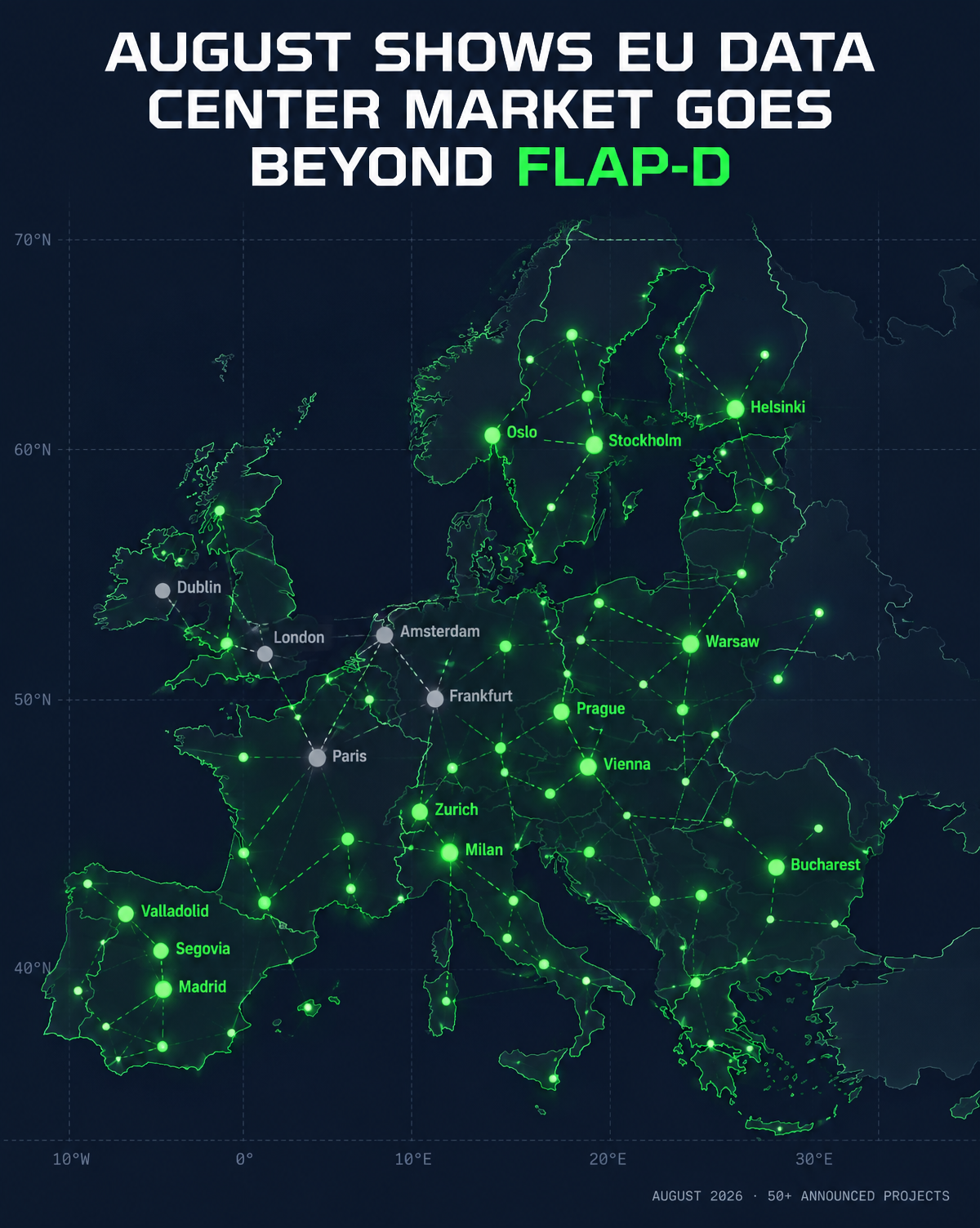
Why Data Sovereignty Matters: Europe's Data Centre Market Is Growing Beyond FLAP-D
August 2026 announcements show capacity moving to the Nordics, Iberia, CEE and the Alps — and increasingly into converted industrial sites. Power, not postcode, now decides where Europe builds.

What Is Sovereign AI Infrastructure? A Technical Guide to Requirements, Energy and the AI Factory Model
Sovereign AI infrastructure is the full stack — compute, power, data, jurisdiction — a country or enterprise needs to train and run AI without depending on a foreign hyperscaler. This guide breaks down the technical requirements, energy constraints, and the AI Factory model that defines it in 2026.
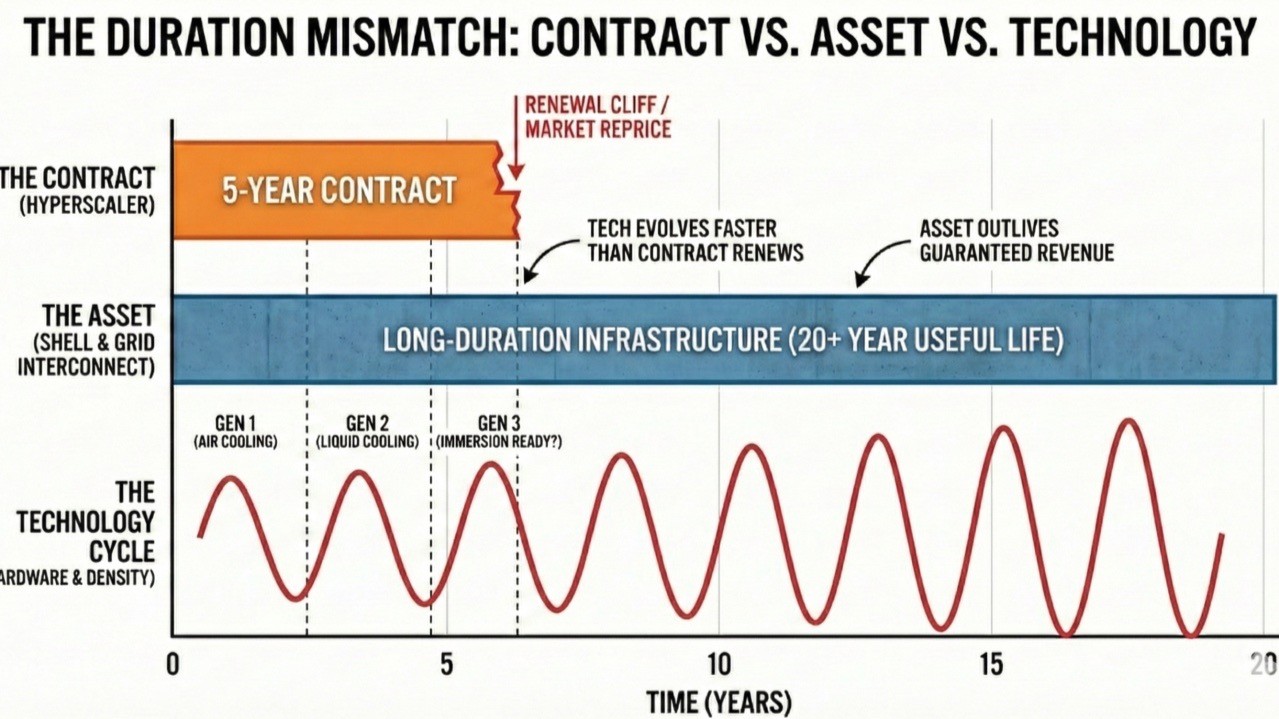
The Trillion-Dollar Illusion: Why Data Centers Aren't the Next Renewables
The AI revolution has inverted the asset class. We are no longer building real estate; we are building rapidly depreciating industrial machinery inside a concrete box.