
From Cloud Dependency to Sovereign AI Infrastructure

Article originally published on LinkedIn
View original article on LinkedInFor more than a decade, the cloud has shaped how companies think about infrastructure. It abstracted complexity, removed the need for ownership, and turned computing into a utility that could be accessed on demand. As an entrepreneur, I benefited from this architecture when building SocialCar, first on Azure (yes, we are so old that our first platform was coded on .NET), and later on Google Cloud (yes, fresh blood came into the company and we refactored to PHP). Whether you were a startup building your first product or a large enterprise modernizing legacy systems, the logic was consistent: do not own, do not manage, simply connect and scale. This model worked extraordinarily well because it aligned with the priorities of the time—speed, flexibility, and capital efficiency.
The Limits of Cloud Architecture
However, the rise of artificial intelligence is beginning to expose the limitations of that paradigm. What was once a clear advantage is becoming, in certain contexts, a structural vulnerability. The reason lies in the nature of AI itself. Unlike traditional software, which executes predefined logic, AI systems are deeply intertwined with data, continuously evolving through training, inference, and feedback loops. As a result, they are not merely tools that support operations; they increasingly become embedded within the core decision-making processes of an organization.
This shift has profound implications. When AI systems are used to analyze legal documents, support financial decisions, or synthesize internal knowledge, the question of where and how they operate can no longer be treated as an implementation detail. It becomes a strategic concern. Companies that once felt comfortable outsourcing infrastructure are now confronted with a more complex reality: the intelligence they rely on is often processed outside their direct control, within environments that are opaque, shared, and governed by external providers.
The prevailing model of accessing AI through APIs reinforces this dynamic. On the surface, it offers convenience and rapid deployment, but it also introduces layers of abstraction that obscure critical aspects of the system. Data flows through external infrastructures, models evolve independently of the user, and the underlying mechanisms remain largely inaccessible. Over time, as organizations integrate these services more deeply into their workflows, a form of dependency emerges that is difficult to reverse. Pricing structures, access conditions, and even the behavior of the models themselves are subject to change, yet the organization has limited influence over any of these variables.
How Do We Move Forward?
It is within this context that the concept of data defense must be reconsidered. Traditionally, data defense has been associated with cybersecurity measures designed to protect against unauthorized access or breaches. While these concerns remain relevant, they do not fully capture the strategic dimension of the challenge. The more fundamental issue is not simply whether data is secure, but whether the systems that process and interpret that data are under the organization's control.
This is where the idea of Sovereign AI Infrastructure begins to take shape. Rather than relying on externally managed services, this model proposes that organizations deploy and operate their own AI systems within controlled environments. In practical terms, this involves running open-source models on dedicated hardware, with data pipelines that remain fully isolated and auditable. The objective is not merely to replicate the functionality of cloud-based AI, but to redefine the relationship between the organization and its technological capabilities.
The distinction is subtle but significant. In a cloud-based model, AI is consumed as a service; it is something that can be accessed but not fully governed. In a sovereign model, AI becomes an internal capability, integrated into the organization's infrastructure and subject to its policies, constraints, and objectives. This shift transforms AI from an operational expense into a strategic asset, one that can be developed, optimized, and aligned with long-term goals.
Beyond Cybersecurity: Strategy and Control
It is important to emphasize that Sovereign AI Infrastructure is not simply about relocating workloads from the cloud to on-premise environments. Such a move, in isolation, would not address the underlying issues of control and transparency. True sovereignty requires a comprehensive approach that encompasses compute, models, data, and operations. The infrastructure must be physically and logically controlled, the models must be accessible and adaptable, and the data must remain within clearly defined boundaries. Only then can an organization claim to have full visibility and authority over its AI systems.
The relevance of this model is particularly evident in sectors where data sensitivity and regulatory requirements are paramount. Legal firms, financial institutions, and public sector organizations are among the first to explore sovereign approaches, not because they seek technological differentiation, but because their operating constraints leave little room for ambiguity. For them, the ability to audit, govern, and secure every aspect of the AI lifecycle is not optional; it is essential.
Yet the implications extend beyond regulated industries. As AI becomes more deeply embedded in products and services, the question of control will increasingly influence competitive dynamics. Organizations that rely entirely on external providers may find themselves constrained by cost structures, limited customization, and strategic dependencies. In contrast, those that invest in their own infrastructure can shape their capabilities more freely, optimize performance for specific use cases, and retain ownership over the value they create.
This does not imply that the cloud will disappear or lose relevance. On the contrary, it will continue to play a critical role in enabling experimentation, rapid prototyping, and access to cutting-edge developments. However, the center of gravity is beginning to shift. For core systems—those that define how a company operates and competes—the emphasis is moving toward environments that offer greater control and predictability.
In this sense, data defense is not a defensive posture, but a strategic orientation. It reflects a recognition that in an AI-driven world, the ability to control infrastructure is closely linked to the ability to control outcomes. The organizations that internalize this insight early will be better positioned to navigate the complexities of the next technological cycle.
Ultimately, the transition from cloud dependency to Sovereign AI Infrastructure is not about rejecting one model in favor of another. It is about recalibrating the balance between convenience and control. The cloud solved many problems of the past, but AI is introducing new ones that require a different approach. As this transition unfolds, the companies that succeed will be those that understand that infrastructure is no longer a background concern, but a central element of strategy.
And in that context, the question of data defense becomes unavoidable, not because it is urgent, but because it is foundational.
Related Articles

What Sovereign AI Actually Means
Sovereign AI is often reduced to geography — where data is stored or compute is located. But sovereignty is about control: ensuring the full AI stack can be governed, inspected, and evolved internally.
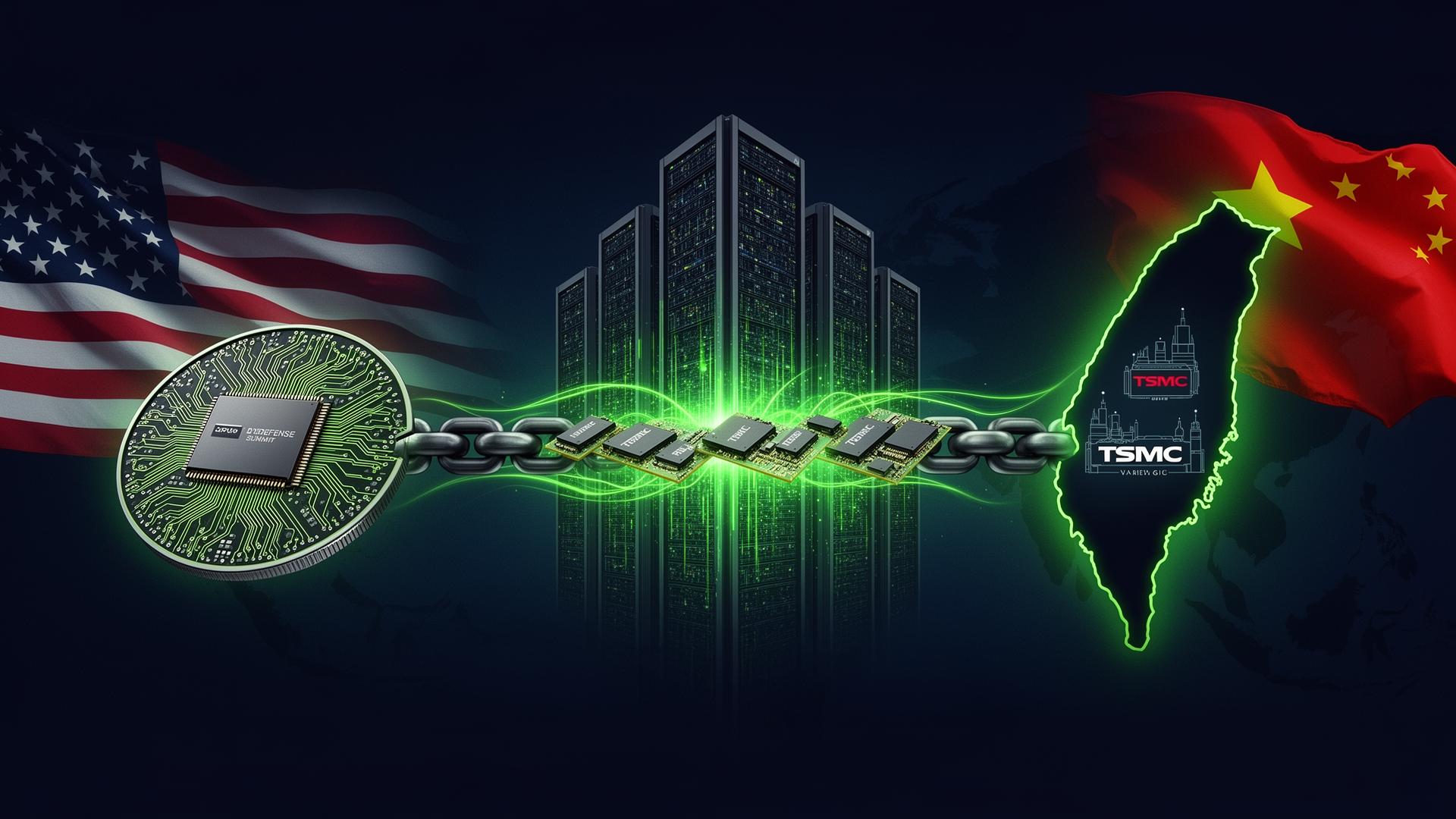
Trump in Beijing, Taiwan on the Table: What the Silicon Value Chain for GPUs Means for Data Centers and AI
Trump's visit to Beijing this week put Taiwan back at the center of the US-China conversation. The silicon value chain for GPUs runs through a single island — and every data center build and AI roadmap in the West depends on how that conversation lands.

Why War on Middle East Makes of Spain the Favourite to Win the World Cup of AI Infrastructure and Capital Deployment
As geopolitical conflict reshapes the map of digital infrastructure, Spain emerges as the safest, most stable environment for AI deployment in Southern Europe — combining renewable energy, regulatory reform, and political distance from active theaters of conflict.