
What Sovereign AI Actually Means

Article originally published on LinkedIn
View original article on LinkedInThe term "Sovereign AI" is increasingly used in policy, enterprise strategy, and infrastructure discussions, yet most definitions remain incomplete. It is often reduced to geography: where data is stored, where compute is located, or whether systems operate within a given jurisdiction. However, this framing is incomplete.
1. Sovereignty is About Control
An organization can run workloads within its own country and still depend on external APIs, proprietary models, and opaque infrastructure layers. In such cases, the system may be geographically compliant, but it is not sovereign. The intelligence layer (the part that processes, interprets, and generates outcomes) remains outside the organization's control.
This distinction matters because AI is becoming embedded in decision-making, operations, and knowledge systems. As this happens, the risks associated with dependency become more visible. If critical workflows rely on systems that cannot be audited, modified, or governed internally, the organization is effectively outsourcing part of its core capability.
Sovereign AI, properly understood, is the opposite of this model. It is an architectural choice to ensure that the full AI stack, including compute, models, data, and operations, can be controlled, inspected, and evolved internally. The challenge consists on redefining which parts of the system can remain external and which must be brought under direct control.
2. The Structural Shift: From Service to System
The current dominant model treats AI as a service. Companies access models through APIs, pay per usage, and integrate outputs into their workflows. This approach is efficient at the beginning because it minimizes friction and accelerates experimentation.
However, as usage scales, its limitations become evident.
Costs become structural rather than variable. Model behavior remains opaque and externally governed. Data flows through systems that cannot be fully controlled.
At that point, AI becomes part of how the organization operates. And operating on external systems introduces a form of dependency that is difficult to unwind. The sovereign model addresses this by reframing AI as a system rather than a service. This requires aligning four layers:
- Compute, running on dedicated infrastructure that is visible and controllable
- Models, which can be inspected, adapted, and fine-tuned internally
- Data, which remains within defined boundaries and does not depend on external calls
- Operations, which are managed as part of the organization's internal capabilities
When these layers are aligned, AI stops being something the company uses and becomes something the company owns. The shift changes how AI is accounted for, governed, and integrated into long-term strategy.
In the service model, AI is an expense. In the system model, AI becomes an asset.
3. Open LLMs as the Enabler of Sovereignty
The transition to Sovereign AI Infrastructure would not be possible without a critical development: the maturity of open and controllable large language models.
Until recently, access to high-performance AI required reliance on proprietary systems. Today, models such as Llama, Mistral, and other open-weight architectures have reached a level of capability that makes them viable alternatives for a wide range of enterprise use cases.
The importance of open LLMs is not just cost or performance. It is control. An open or controllable model allows an organization to:
- Run inference without external API calls
- Fine-tune behavior on proprietary data
- Audit outputs and internal mechanisms
- Align the model with specific domain requirements
This removes the black box layer that defines most API-based AI systems. A practical implementation typically follows a structured approach:
First, organizations deploy open LLMs on dedicated GPU infrastructure, either in controlled on-premise environments or in enterprise-grade colocation facilities. These environments are designed to support high-density workloads, ensuring performance without sacrificing control.
Second, models are fine-tuned or adapted using internal data. This step is critical, as it transforms a general-purpose model into a domain-specific system aligned with the organization's needs. Techniques such as retrieval-augmented generation (RAG) allow models to access internal knowledge bases without exposing that data externally.
Third, inference pipelines are designed to be fully isolated, meaning that no external calls are required during operation. This ensures that sensitive data never leaves the controlled environment.
Finally, organizations implement monitoring and governance layers that track performance, usage, and compliance, ensuring that the system remains aligned with both operational and regulatory requirements.
4. A Practical Path to Sovereign AI
Adopting Sovereign AI Infrastructure does not require a radical transformation from the outset. It can be implemented progressively, starting with the areas where control matters most.
The first step is to identify critical AI workloads—those that process sensitive data, support core operations, or generate significant cost at scale. These workloads are the most exposed to the risks of dependency and therefore the most suitable candidates for sovereign deployment.
The second step is to establish a hybrid architecture. Public cloud remains useful for experimentation, development, and non-critical use cases. Sovereign infrastructure is introduced selectively, focusing on systems where control, performance, and predictability are essential.
The third step is to deploy dedicated infrastructure, typically through colocation environments that provide high availability, scalable power, and connectivity. This avoids the capital intensity of building facilities while ensuring control over compute resources.
The fourth step is to transition from external APIs to open LLM-based pipelines, progressively replacing external dependencies with internally controlled systems. This is where sovereignty becomes tangible, as the organization gains full control over how intelligence is generated and applied.
Finally, the organization builds internal operational capabilities to manage, optimize, and evolve these systems over time. Sovereignty is not a one-time decision, but an ongoing process of control and adaptation.
Final Thought
As AI becomes central to how businesses operate, the question of control becomes unavoidable. The trade-off between convenience and ownership, once abstract, becomes concrete.
Organizations that continue to treat AI as a service will benefit from speed, but accept dependency, legal and compliance risks and, more troubling, potential loss of competitive advantage based on proprietary data or know-how. Those that move toward Sovereign AI Infrastructure will accept complexity, but gain control.
Over time, that difference compounds.
Related Articles

From Cloud Dependency to Sovereign AI Infrastructure
The cloud abstracted complexity and turned computing into a utility. But AI is exposing its limits. When intelligence systems become embedded in core decision-making, the question of control becomes strategic — not just operational.
The Trillion-Dollar Illusion: Why Data Centers Aren't the Next Renewables
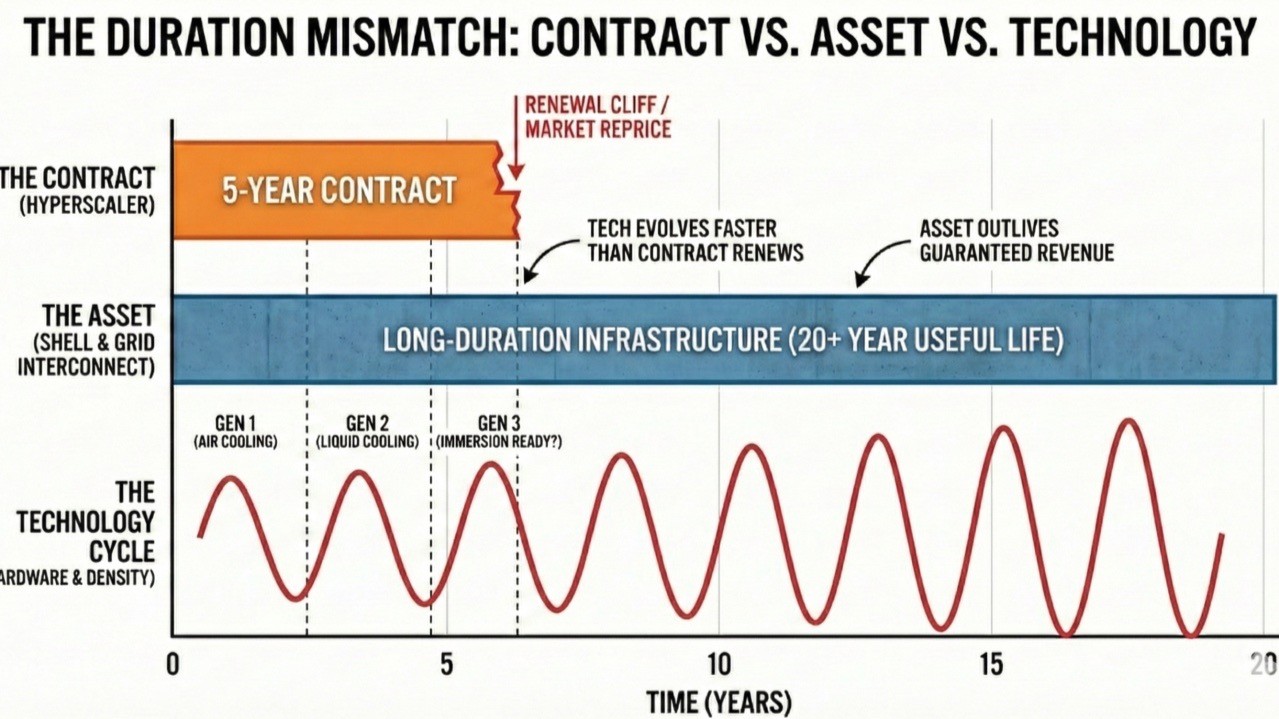
The AI revolution has inverted the asset class. We are no longer building real estate; we are building rapidly depreciating industrial machinery inside a concrete box.
Oracle's $300B Bet — Why AI Infrastructure Revenues May Be More Solid Than Critics Think
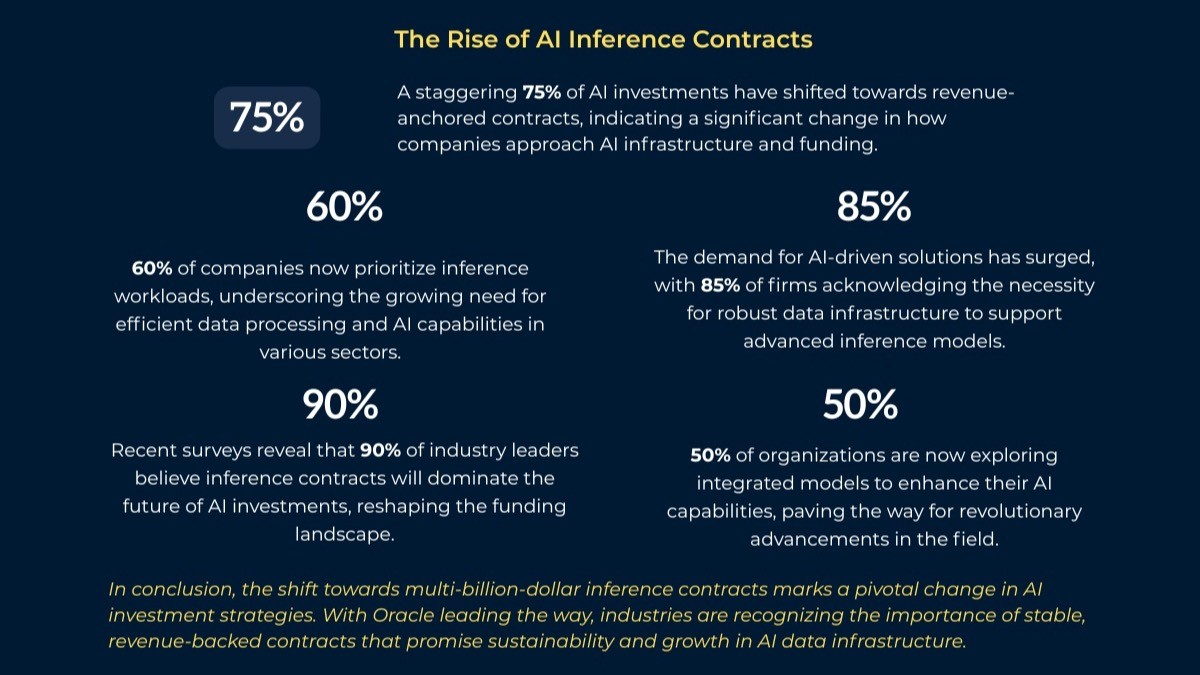
Oracle's $300B deal with OpenAI and the rise of multi-billion-dollar inference contracts are anchoring AI infrastructure revenue models, countering the bubble narrative.